


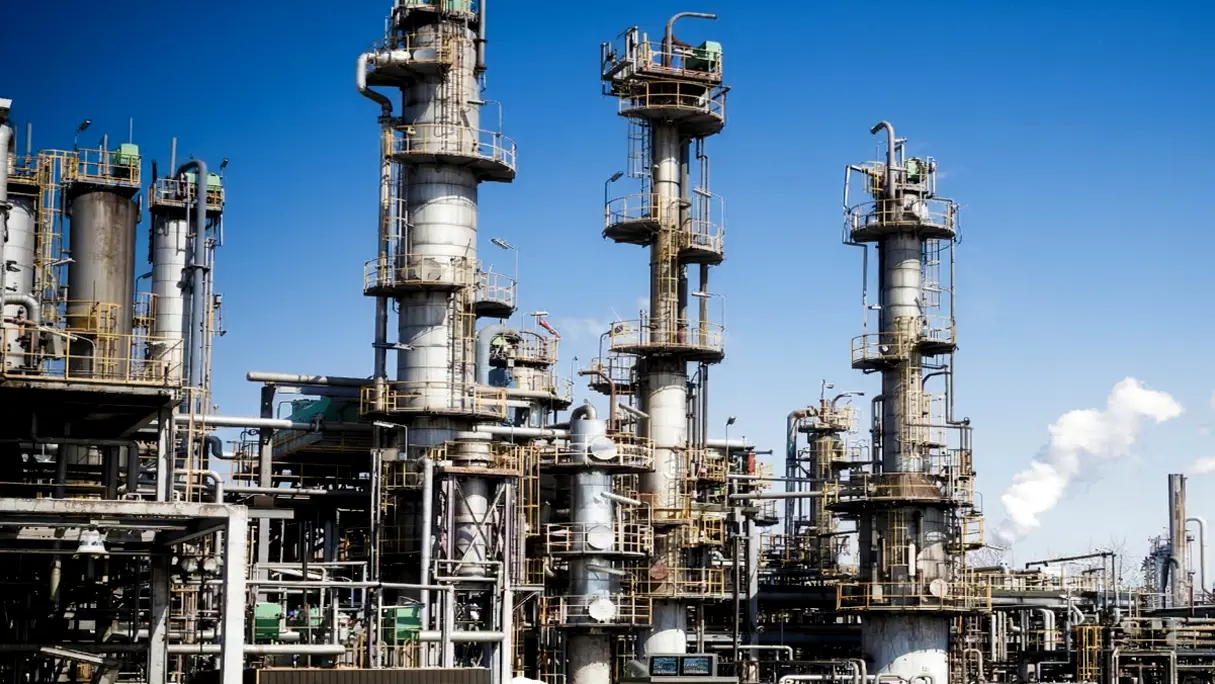
Optimization of a distillation yield involves a balance that is controlled in both thermal and fluid mechanics. Plant optimization through internal equilibrium and heat integration enables plants to remove wastage of energy and still maintain product purity.
Maximisation of the reflux and feed temperatures makes the operation efficiency a direct competitive advantage, which guarantees a higher output with a much lower amount of fuel consumed.
1. Feed Preheating and Thermal Integration
The best method of minimizing re-boiler duty (fuel consumption) is to make sure that the feed water is pumped into the column at the optimum temperature.
- Heat Exchange: Preheat the cold incoming feed with the use of hot bottom product or the overhead vapors with a heat exchanger.
- Optimal Phase: Strive to have a feed that is a saturated liquid. When the feed is cold, the reboiler will have to exert more effort to warm up to boiling temperature. In case it is too hot (vaporized), it can cause disruption of the vapor-liquid equilibrium (VLE) at the stripping section.
2. Reflux Ratio Management
The reflux ratio is the "dial" for purity, but it is also the primary driver of energy cost.
- The Law of Diminishing Returns: As the ratio of reflux increased, the separation increased; however, more heat was required in the reboiler, and more cooling was required in the condenser.
- Minimum Reflux: It is preferable to work as near as possible to your desired purity specifications using the minimum possible ratio of a minimum reflux. Even a 5–10% reduction in excess reflux can significantly lower fuel bills.
3. Feed Tray Optimization
In case the feed is delivered to the column on the incorrect tray, the column will have to make up the difference in terms of additional heat and reflux.
- Composition Matching: The feed must be introduced at the point where the internal liquid/vapor composition matches the feed composition the most.
- Flexibility: Modern columns often feature multiple feed nozzles. The periodic testing of the various entry points can be used to explain the variation in the quality of raw materials.
4. Pressure Reduction (Vacuum Distillation)
When the operating pressure of the column is lowered, the boiling points of the components are lowered.
- Energy Savings: As the boiling points decrease, the temperature difference across the reboiler is greater and more efficient to transfer heat to or even use lower-pressure (less costly) steam.
- Quality of the product: Low temperature prevents heat-sensitive products from deteriorating and thus offers a superior quality of the yield.
Understanding Energy Consumption in Separation Processes
Separating is inherently power-intensive, which can use up to half of the total utility expenditure of a plant. This is achieved by continually retaining heat and vaporizing liquids, and any lack of efficiency in the column will require additional steam just to get the same outcome.
To deal with these costs, it is very important to be aware of the type of distillation columns and the energy profile of a particular column. It can be demonstrated that selecting the appropriate column to use in your particular boiling point range can significantly reduce the energy penalty that is needed to separate complex mixtures.
Key Operating Parameters That Impact Yield
Yield is dictated by a delicate balance of pressure, temperature, and flow. If the pressure inside the column fluctuates, it throws off the boiling points of your components, leading to "off-spec" products that must be re-processed. How does a distillation column work under these pressures? It depends on maintaining a steady vapor velocity to ensure proper contact between phases.
Key factors include:
- Vapor Velocity: Too high, and you get "entrainment"; too low, and you get "weeping."
- Column Pressure: Directly impacts the relative volatility of the chemicals.
- Liquid Distribution: Ensures every inch of the column is contributing to the separation.
Reflux Ratio and Its Direct Effect on Product Purity
The reflux ratio is the "steering wheel" of your distillation process. You enhance the interaction of the molecules in the column by pumping some of the condensed overhead liquid back into the column, thus further enhancing the separation and purifying the product.
However, there is always a trade-off:
- Higher Reflux: This augments purity but needs a lot more heat of the reboiler.
- Lower Reflux: Saves energy, but exposes your best product to the risk of being contaminated with the heavier components.
Tray vs Packed Columns: Performance Comparison
The decision on which internals you should use in tray or packed is now subject to your individual needs in terms of chemical loading and pressure. Tray columns are rough and can accommodate large liquid loads, but packed columns have a lower pressure drop and are more efficient with vacuum systems.
Is your internal architecture the correct one, or is your column design bottlenecking your production capacity? Most plants have discovered that throughput can be boosted by up to 25 percent without varying the column shell by switching to high-efficiency structured packing.
Heat Integration Strategies to Reduce Fuel Usage
To use wasted energy in another process, modern plants use the concept of Heat Integration to capture the energy used in one part of the process and convert it into another. This is usually through the hot bottoms product, which is used to pre-heat the coming feed so that the primary heaters are not heavily burdened.
Effective integration strategies include:
Feed Pre-heating: With the help of waste streams, one can initiate the boiling process.
Vapor Recompression: It is the utilization of mechanical energy to heat the vapors of waste.
Side Reboilers: Providing heat to the column at certain positions in order to equalize the thermal load.
Common Operational Mistakes That Lower Output
The largest error is that of too much purification, or over-fractionation - the demand to have 99.9% purity when the customer wants 98%. Even this small 1.9 percent difference can at times increase your energy use by twice and may unwarrantedly strain your internal trays and packing.
Other common errors include:
Negligence of Feed Temperature: Cold feed would require the bottom of the column to work harder in order to achieve vaporization.
- Poor Level Control: This is the letting of the column base to flood, thus completely destroying the flow of vapour.
Monitoring Temperature and Pressure Profiles for Stability
Think of the temperature profile as the "X-ray" of your column's health. By monitoring sensors at every stage, you can see exactly where the separation is happening—and where it isn't. A sudden shift in the temperature on a specific tray is a "Warning Sign" of internal damage or fouling.
Pressure drop (Delta-P) monitoring is equally critical:
- High Delta-P: Usually indicates fouling, scaling, or a physical blockage in the trays.
- Low Delta-P: Often means the vapor is "tunneling" through the liquid without interacting, leading to poor purity.
Role of Feed Quality in Overall Column Performance
The column is only as good as what you put into it. Variations in feed composition, such as a sudden increase in impurities, can completely disrupt the internal equilibrium and force the operators to go into "emergency manual" mode.
Is your upstream process providing a consistent feed, or is the distillation column being used to "fix" mistakes made in previous stages? Stabilizing the feed is often the cheapest way to increase column efficiency.
Impact of Column Upgrades
|
Upgrade Type |
Potential Yield Increase |
Energy Savings |
Implementation Time |
|
Digital APC Control |
2-4% |
5-10% |
2-3 Months |
|
High-Efficiency Packing |
10-25% |
15-20% |
3-4 Weeks (Shutdown) |
|
Feed Pre-heating |
1% |
12-18% |
1-2 Months |
|
Tray Cleaning |
3-5% |
5% |
1-2 Weeks |
Reducing Downtime Through Predictive Maintenance
The old-fashioned policy of failing to mend a column until it falls down will have disappeared in 2026. The idea of predictive maintenance is that AI and vibration sensors could be deployed to listen to the heart of the column and pick up the rattling of the tray or the cavitation within the pump and issue a warning of the need to close the column several weeks before.
By predicting failures, you can:
Order Early: Rush-shipping of heavy internals is very expensive.
Timing According to Demand: Do small repairs when production is at a low level to reduce the cost of downtime.
Advanced Process Control for Higher Recovery Rates
The Advanced Process Control (APC) program utilizes software to implement hundreds of small adjustments to valves and heaters every minute - adjustments which a human operator could not maintain. This maintains the column at the edge of the envelope at the maximum recovery and minimum fuel.
These systems are particularly effective at:
- Managing Disturbance: Instantly reacting to changes in ambient air temperature or feed flow.
- · Maximizing Purity: Purity is not a waste of energy to purify the product beyond the target.
Economic Impact of Optimization: Cost vs Output Analysis
Optimization is not merely of better science but rather of better math. Just a 0.5 percent increase in recovery in a large-scale column will translate to millions of dollars of incremental revenue per year. Do you estimate the ROI of modernizing your internal trays in the recent past?
Recovery of the cost of optimization is typically achieved in a short period of time by:
- Burnt Less Gas/Less Steam/Per Gallon of Product
- More Producible Volume: More sellable out of the same quantity of raw feed.
Final Checklist for Achieving Maximum Throughput
Make certain that prior to completing your optimization plan, you are going through this checklist to ensure that your column is perfectly aligned to meet the requirements of 2026.
Reflux Calibration: Does the reflux ratio maximize the existing feed composition?
Tray Integrity: Is the pressure drop checked for any indication of foul or weeping?
Feed Quality: Does the feed coming in reach an optimum temperature and tray position?
Sensor Accuracy: Have the thermocouples been calibrated to guarantee the profile of the temperature is natural?
Safety Margins: Does the column work well above the f def point?
Frequently Asked Questions (FAQs)
- What are the main types of distillation columns?
These two main types are batch columns (smaller quantities) and continuous columns, which are used in the normal way in large-scale industrial processing.
- Why does my column suddenly start "shaking" or vibrating?
This usually indicates the presence of "Flooding," in which case the high velocity vapor is holding off the liquid, and this results in a huge mechanical imbalance within the shell.
- Can I increase throughput by just increasing the heat?
Only to a certain point. At some point, the vapor velocity will be great enough that it pushes liquid out of the top (entrainers), thus destroying the purity of the product.
- How does the 2026 safety standard affect my column maintenance?
New 2026 standards involve a higher level of material traceability of internal trays, and an increase in the non-destructive testing (NDT) to eliminate structural failures.