


Quick Answer
City water storage tanks store municipal supply so homes and buildings don't run dry during cuts. For a family of four, 1,000–2,000 litres is the standard size. Plastic (LLDPE/HDPE) tanks like Sintex suit most homes; RCC works for large underground sumps; chemical storage needs HDPE, PP, or FRP tanks, never a regular water tank. Clean tanks twice a year and check certifications (BIS/ISI, food-grade, warranty) before buying from any manufacturer.
Water cuts aren't rare in Indian cities anymore. That's why storage tanks have gone from optional to essential — for homes, societies, offices, and municipal buildings alike. But bigger isn't always better. Material, placement, and maintenance matter just as much as size.
At Anomizer, we work with water infrastructure projects across urban India. This guide reflects that field experience, not just spec sheets.
Why Storage Matters More Than It Used To
Most municipal water boards supply water for only an hour or two a day. Without storage, a missed window means no water. A well-sized tank acts as a buffer against that.
For societies, an undersized tank affects everyone at once — rationing disputes, complaints, and frustrated residents. That's why builders now plan tank capacity during construction, not after.
Types of Tanks You'll Actually Encounter
Overhead tanks (OHT) sit on the roof and use gravity for pressure. Simple to install, no pump needed for lower floors.
Underground sump tanks store larger volumes below ground, usually feeding overhead tanks via a booster pump. Common in apartment complexes.
Vertical and horizontal tanks solve for space differently — vertical where floor space is tight, horizontal where height is limited but area isn't.
Chemical storage tanks are built for acids, alkalis, and treatment chemicals — typically HDPE, PP, or FRP. Never interchange these with drinking water tanks; the engineering standards are completely different.
What Determines Tank Life
Plastic (LLDPE/HDPE): Light, rust-proof, most common in homes. Quality varies a lot — food-grade, UV-stabilised, multi-layer tanks resist algae and cracking far better than cheap single-layer ones.
Sintex & branded tanks: People looking out for a sintex water tank generally want reliability without much investigation into the matter. Branded tanks have more consistency in terms of wall thickness and UV protection.
RCC tanks: Generally found in sumps and municipalities. Last decades if constructed properly; otherwise tend to leak and crack.
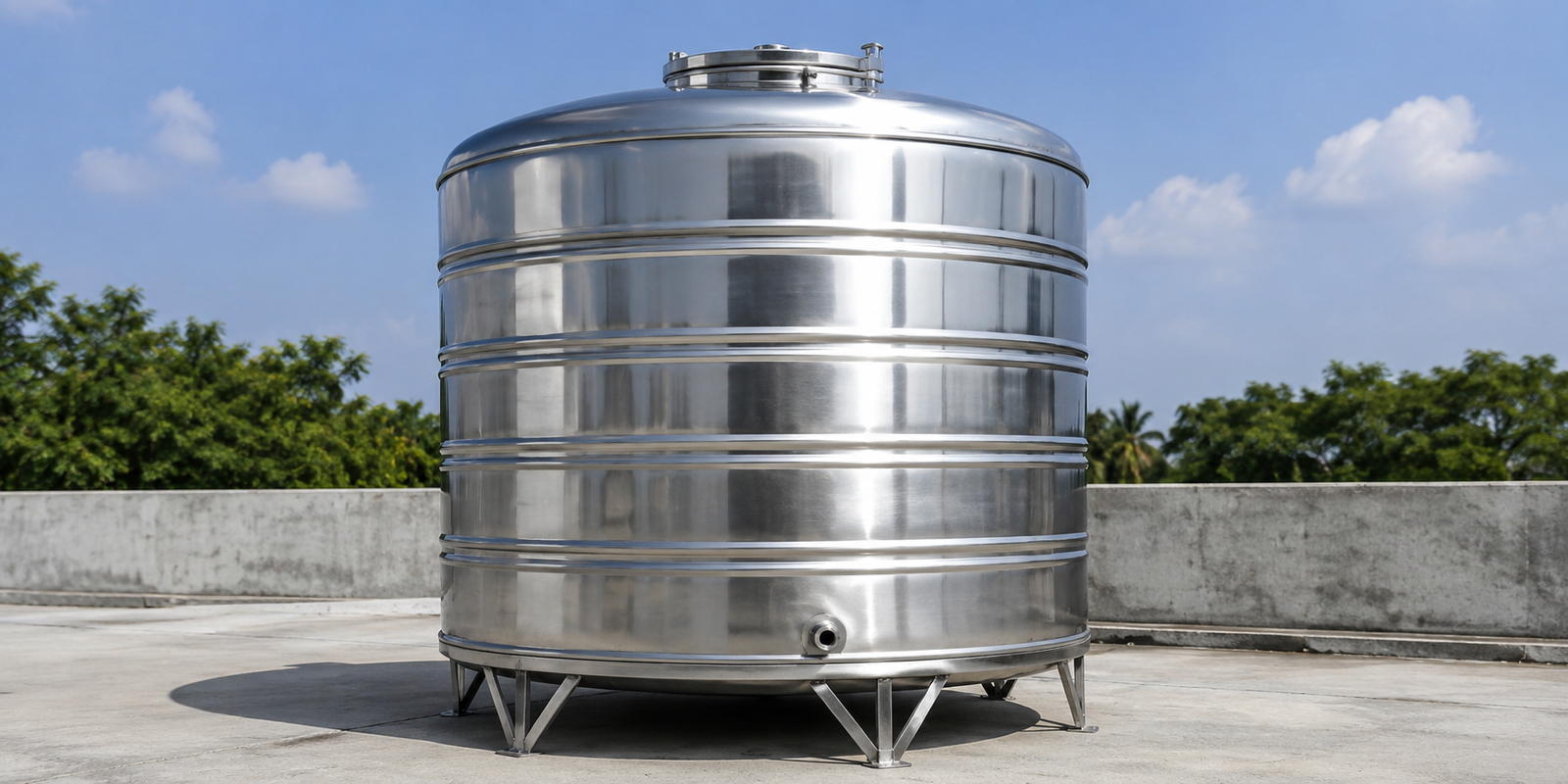
Stainless Steel: Used wherever sanitation is of prime importance – hospitals, food units, high-end buildings. Higher cost, but protects from bacteria and temperature changes.
FRP tanks: A middle ground — strong, corrosion-resistant, used for both water and chemicals.
What the Best Tanks Have in Common
Food-grade or NSF-certified inner layers, UV-stabilised outer layers, adequate wall thickness, and a tight-sealing lid. Sunlight getting in through a poor seal is the top cause of algae.
For capacity, use actual consumption — roughly 135 litres per person per day is the standard planning figure. Size storage for at least one to two days of backup.
Choosing a Manufacturer
Don't compare on price alone. Check for BIS/ISI-relevant certification, warranty terms (5–10 years for plastic tanks), local service support, and documented material specs. For chemical storage tanks manufacturers, ask for a chemical compatibility chart — the wrong material corrodes fast.
At Anomizer, we help buyers compare real specifications across water storage tank manufacturers in India, not just showroom claims.
Maintenance Tips
Keep the tank on a level base. Shade it where possible. Clean twice a year and inspect lids, float valves, and fittings. For sumps, check for seepage after monsoon.