


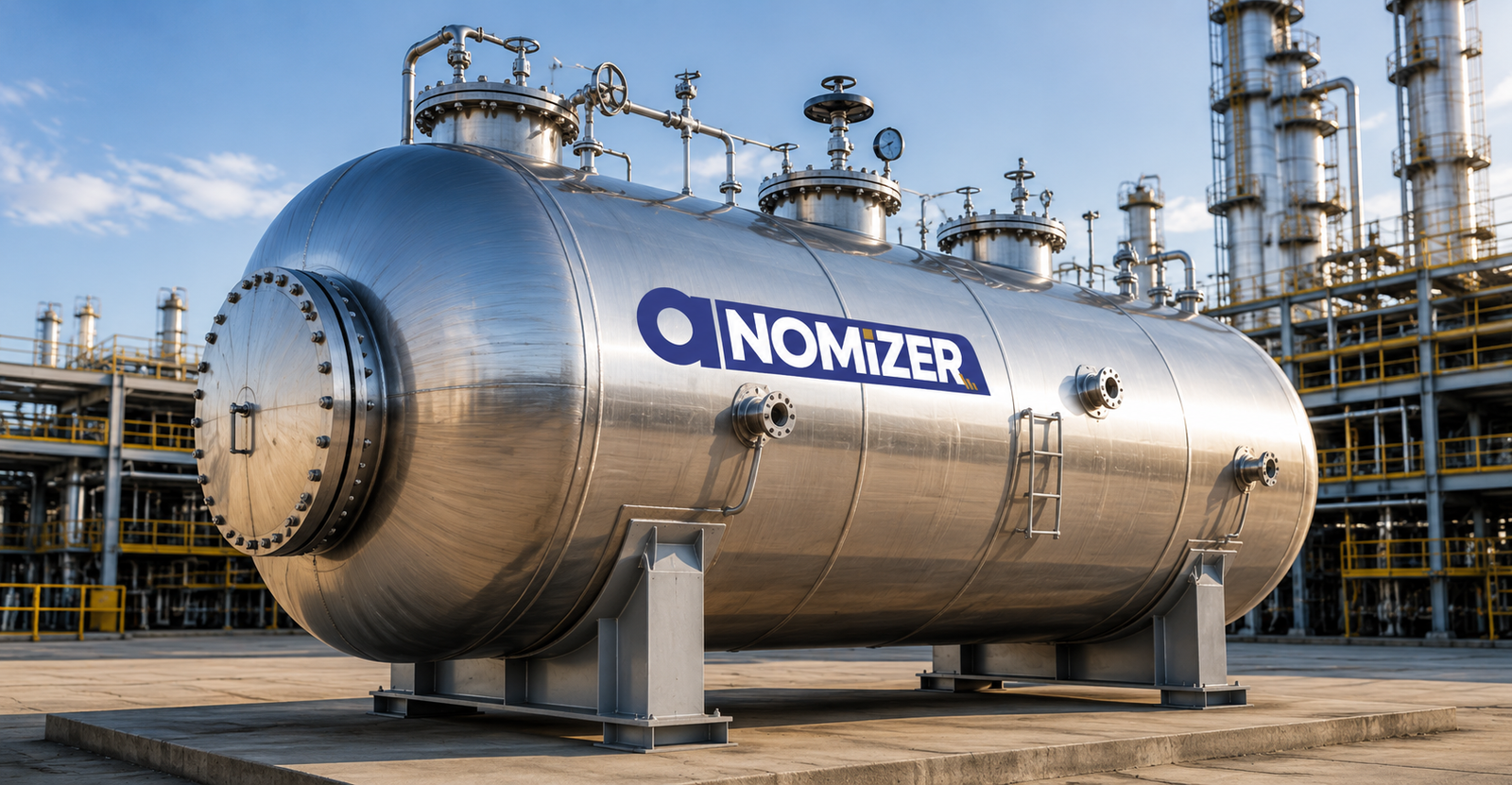
Walk into any chemical plant, refinery, or power station, and you'll spot them almost immediately — big cylindrical or spherical tanks, often painted in muted industrial colors, sitting quietly under pressure that could do serious damage if something went wrong. That's a high pressure vessel, and despite how unremarkable it might look from the outside, it's one of the most heavily engineered pieces of equipment in any industrial facility.
I've spent enough time around fabrication shops and plant walkthroughs to know that people either treat pressure vessels as an afterthought — just another line item in a procurement list — or they understand exactly how much can go wrong if the engineering isn't right. There's not much middle ground. So let's talk about what actually goes into a pressure vessel, how it's designed, built, and tested, and what you should be asking before you buy one.
What’s a High Pressure Vessel, Anyway?
Simply put, it is a closed vessel designed to store gas or liquid under pressure much higher than the atmospheric pressure outside it. It's not just an advertising term; "high pressure" really refers to such conditions when forces acting from inside the vessel can easily destroy any regular container within several seconds.
You'll find these in oil refineries, LPG storage yards, pharmaceutical plants, food processing units, and power generation facilities. Boilers, reactors, autoclaves, and pressurized storage tanks all fall under this umbrella. What separates them from a regular tank isn't just the pressure rating — it's everything that goes into making sure they don't fail: material selection, wall thickness, weld quality, and rigorous testing before they ever go into service.
The Different Types of Pressure Vessel You'll Come Across
Not every vessel is built the same way, and the classification usually comes down to shape, orientation, and function.
By shape, you've got cylindrical vessels (the most common, honestly, because they're easier and cheaper to fabricate), spherical vessels (which handle stress more evenly across the surface — that's why LPG storage tends to use them), and occasionally conical designs for specific process needs.
By end closure, engineers choose between hemispherical, ellipsoidal, torispherical, or flat heads, depending on the pressure rating and cost constraints.
By orientation, vessels are either horizontal or vertical — a decision usually driven by available floor space, the process it's feeding into, and how the vessel needs to be supported.
And by function, you'll see storage vessels, reactor vessels, and heat exchangers, each with a completely different internal configuration depending on what's happening inside.
Getting the type wrong isn't just an inefficiency — it can genuinely compromise how the vessel handles pressure over its lifetime.
Where Pressure Vessel Design Gets Complicated
This is where things stop being simple. Pressure vessel design isn't a matter of picking a shape and thickening the walls until it feels safe. Engineers are juggling a handful of variables simultaneously:
- How much pressure the vessel will actually see during operation, including upset conditions
- Temperature swings and how the material expands or contracts
- Fatigue from repeated pressure cycling over years of use
- Corrosion — especially critical if the vessel is holding anything chemically aggressive
- Weld joint efficiency, since welds are almost always the weakest point structurally
A vessel that's been designed properly doesn't just meet today's operational requirements. It's built with margin — enough that an unexpected pressure spike doesn't turn into a plant-wide emergency. That margin is the difference between an engineer who's done this for years and someone cutting corners on a spec sheet.
Pressure Vessel Thickness Calculation: Where the Real Math Happens
If there's one calculation that keeps engineers up at night, it's pressure vessel thickness calculation. Get it wrong in one direction, and you've got a vessel that can rupture under normal operating pressure. Get it wrong the other way, and you're paying for steel you didn't need — sometimes tens of thousands of dollars in unnecessary material.
The calculation typically pulls from formulas in the ASME code, factoring in the design pressure, the allowable stress of whatever material's being used, the internal radius, joint efficiency at the welds, and a corrosion allowance based on what the vessel will be exposed to over its service life. None of this is guesswork — it's standardized precisely because the consequences of getting it wrong are so severe.
Why the ASME Pressure Vessel Code Actually Matters
If you've spent any time in this industry, you've heard people mention the ASME pressure vessel code like it's gospel. There's a reason for that. Developed by the American Society of Mechanical Engineers, this code — commonly called the boiler and pressure vessel code — sets the benchmark for design, fabrication, inspection, and testing across the industry.
It's not optional in most jurisdictions. Insurers require it. Regulators require it. And frankly, any manufacturer who isn't building to this standard probably isn't someone you want fabricating equipment that's going to sit under high pressure in your facility. Vessels that pass ASME certification carry a U-stamp — a small mark that represents a lot of engineering scrutiny behind it.
How Pressure Vessel Fabrication Actually Happens
Pressure vessel fabrication is a multi-stage process, and skipping or rushing any one of these stages is where most failures originate.
It starts with material selection — choosing the right steel grade based on the pressure, temperature, and whatever substance the vessel will hold.Thereafter, the plates will be cut and rolled according to their respective shapes, either cylindrical or spherical, depending on the type of design.
After that, the process of welding follows. This can be regarded as the most important step. The welded joints become very strong and will be able to withstand the stress without failing because certified welders use processes such as submerged arc welding. Once the welding process is done, heat treatment is conducted.
Finally, there's inspection — radiographic testing, ultrasonic testing, dye penetrant checks — all designed to catch defects that aren't visible to the naked eye. A hairline crack in a weld seam might not show up until the vessel's under pressure, which is exactly why this stage doesn't get skipped, no matter how tight the production schedule is.
The Hydrostatic Test: The Last Line of Defense Before Service
Before any vessel goes live, it has to pass a hydrostatic test for pressure vessel certification — commonly just called a pressure vessel hydrotest. The process is straightforward in concept: fill the vessel with water, pressurize it to somewhere between 1.3 and 1.5 times its design pressure, and hold it there while inspectors check for leaks, bulging, or any sign of weld failure.
It's a mandatory checkpoint under nearly every international code, and honestly, it's the moment of truth for the entire fabrication process. Everything from material selection to welding quality gets validated — or exposed — right here.
Picking a Pressure Vessel Manufacturer You Can Actually Trust
Not every fabricator is equipped to build to the standard this equipment demands. A solid pressure vessel manufacturer should have ASME certification, a track record you can actually verify, in-house testing capability, and engineers who've been doing this long enough to catch problems before they become expensive.
If you're evaluating a pressure vessel manufacturer in India, look past the sales pitch — check their export history, ask for documentation on past projects, and confirm their compliance with both domestic and international codes. A pressure vessel tank is a long-term investment; the manufacturer you choose determines whether that investment pays off or becomes a liability.
Final Thoughts
A high pressure vessel isn't just a tank sitting in the corner of a plant — it's one of the most safety-critical assets in the entire operation. From the thickness calculations to the final hydrotest, every step exists because the alternative — cutting corners — has real consequences.
Need a pressure vessel manufacturer who won't cut those corners?
Work with a team that's ASME-certified, transparent about their fabrication process, and willing to walk you through the engineering behind every vessel they build. Get in touch to talk through your project requirements and get guidance built around your actual industry needs — not a generic spec sheet.