


A practical breakdown of how industrial distillation columns work and how to choose between tray and packing internals — for engineers, operators, and buyers evaluating equipment.
Quick Answer
An industrial distillation column separates a liquid mixture into purer components by boiling and condensing it repeatedly, using trays (sieve trays being most common) or packing material to bring vapor and liquid into contact. Trays generally suit high liquid loads and easier inspection; packing wins when pressure drop needs to stay low, as in vacuum service. Which one fits your process comes down to feed type, purity targets, operating pressure, and budget — the kind of assessment Anomizer runs for plants regularly.
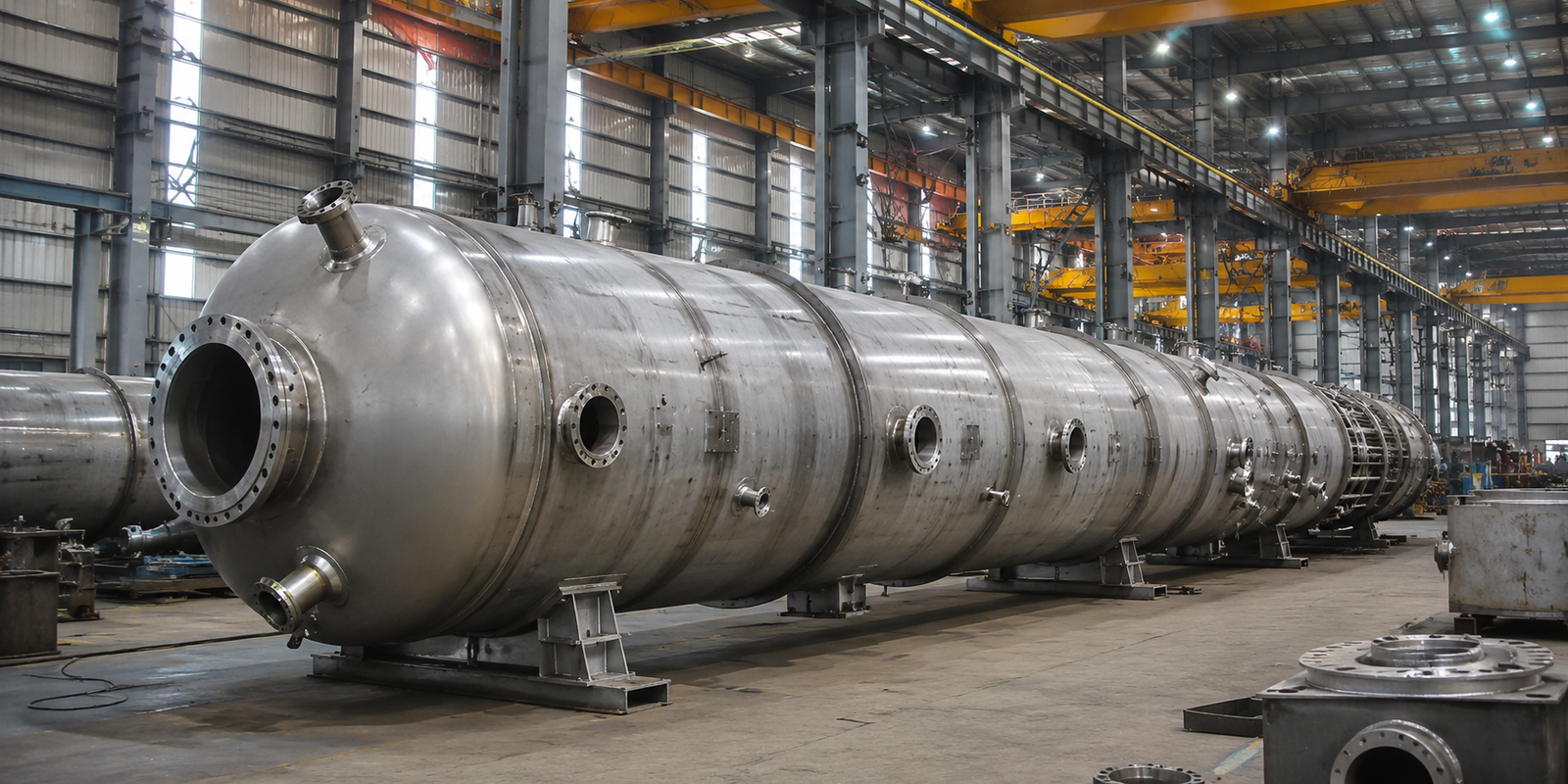
Drive past any refinery or large chemical plant and you'll usually spot it before anything else: a tall, cylindrical vessel towering over the rest of the site. That's an industrial distillation column, and it's one of the most important pieces of hardware on-site. The idea isn't complicated — you're separating a liquid mixture into its parts based on how each component boils. What gets complicated is everything happening on the inside, and that's the part most people never think about until something goes wrong. How these columns are built, and why one internal setup gets picked over another, ends up affecting separation quality, energy bills, and how much maintenance headache you're signing up for. It's the exact conversation our team at Anomizer has with engineers and plant operators every week.
What Is an Industrial Distillation Column?
Strip it to basics and an industrial distillation column is just a vessel that heats a liquid mixture until part of it turns to vapor. Since different compounds don't boil at the same temperature, the vapor climbing up keeps getting richer in whatever's more volatile, while the liquid falling back keeps getting richer in whatever's less volatile. Do that enough times and you end up pulling purified streams off at different heights. This same process sits behind crude oil refining, ethanol purification, natural gas processing, solvent recovery, and pharmaceutical manufacturing.
Distillation Column Parts
A handful of core components show up in nearly every column:
- Shell – the outer body holding everything together
- Reboiler – boils off bottom liquid to keep vapor moving up
- Condenser – turns rising vapor back into liquid at the top
- Reflux drum – splits condensed liquid between reflux and finished product
- Trays or packing – where vapor meets liquid and most separation work happens
- Feed inlet and product outlets – entry and exit points for the mixture and its fractions
- Support structures and manways – hold internals in place, allow inspection access
Miss the mark on any one of these at the design stage and the whole column pays for it later.
Tray Distillation Column: How It Works
Picture a stack of horizontal plates sitting at intervals inside the shell — that's a tray distillation column. Vapor pushes up through openings in each plate and bubbles through a shallow layer of liquid, while liquid moves across the tray and drops to the next one through a downcomer. That bubbling is what actually moves mass between the vapor and liquid phases. Plants reach for trays in large-diameter columns with heavy liquid loads — crude units being the classic example — because trays hold up mechanically and don't foul as easily on dirtier feedstock.
Sieve Tray Distillation Column: A Closer Look
Of all the tray designs, the sieve tray distillation column probably sees the most use, mostly because it's cheap and simple. A sieve tray is just a flat plate punched with small, evenly spaced holes. Vapor forces its way up through them and mixes into the liquid on top, creating the froth needed for good vapor-liquid contact.
Set it next to bubble-cap or valve trays and the sieve tray wins on simplicity — no moving parts, cheaper to fabricate and run. Where it loses ground is operating range: drop vapor flow too low and liquid starts "weeping" through the holes instead of bubbling up, which hurts efficiency. Still, for most everyday jobs, a sieve tray gets it done without breaking the budget.
Types of Packing in Distillation Column Design
Trays aren't the only option. When pressure drop has to stay minimal, or the feed is corrosive, foamy, or heat-sensitive, packed columns tend to work better — filled with material that gives vapor and liquid continuous surface area to interact.
Broadly, there are two types of packing in distillation column applications:
Random packing — small individual pieces, usually rings or saddles, poured in and left to settle wherever they land. Raschig rings, Pall rings, and Intalox saddles are the common names. Cheaper and faster to install, and it handles general-purpose separations fine.
Structured packing — corrugated sheets or mesh arranged in a deliberate, layered pattern. Lower pressure drop and more efficiency per foot of height than random packing, which is why it shows up so often in vacuum work or where column height is tight. The catch is cost — both material and installation.
Deciding between them comes down to what's in the feed, how much efficiency you need, how much pressure drop you can live with, and what the budget allows. There's no single right answer.
Why the Right Column Design Matters
Get the internals wrong and you're risking flooding, weeping, pressure drop above plan, or product that misses spec. Get it right and you're looking at lower energy costs, equipment that lasts longer, and quality that stays consistent run after run. That's why Anomizer spends real time on this with clients from day one — sometimes it's sieve trays for a straightforward job, sometimes structured packing for a tight vacuum application, sometimes just diagnosing why a column already running isn't performing.
What Buyers Are Actually Thinking When Evaluating a Distillation Column
Nobody starts their research by typing "trays vs. packing" into Google. It usually starts with a problem on the plant floor, and the thinking unfolds in roughly this order:
|
Buyer's Question |
What It Usually Leads To |
|
"What am I separating, and how pure does it need to be?" |
Sets the boundaries for diameter, stages, and whether trays or packing even makes sense. |
|
"What's my operating pressure — can I afford a big pressure drop?" |
Vacuum or near-vacuum processes steer buyers toward structured packing pretty quickly. |
|
"Is this feed going to foul, corrode, or foam over time?" |
Dirty or fouling-prone streams push people toward trays, since they're easier to open up and clean. |
|
"What's this going to cost me over time, not just on day one?" |
Sieve trays often win for standard jobs; structured packing wins where efficiency gains justify the spend. |
|
"Who can look at my actual process instead of quoting me a part number?" |
The search shifts from "what is a sieve tray" to a real engineering conversation — usually where our team at Anomizer gets the call. |
Ready to Optimize Your Distillation Process?
Whether you're specifying a new column or getting more out of one already running, the internals you choose make or break the outcome. Reach out to the Anomizer team today for a hands-on consultation — let's build a setup that's actually made for your process, not a generic template.