


A reaction vessel stores raw materials until the process of heating, cooling, mixing or pressure makes some chemical and/or physical transformations occur. A reputable Reaction Vessel Manufacturer builds the vessels in accordance with certain process specifications – temperature, pressure, chemical interaction, mixing and size of the batch. If a mistake occurs in designing a vessel, even the most well-known reaction may go awry – conversion rate slows, temperatures do not rise evenly, batches pass theoretical tests but fail in practice. Otherwise, the reaction vessel simply fades into the background of the process.
Quick answer: The reaction vessel is a jacketed or non-jacketed device that can resist pressure, temperature fluctuations, and constant mixing during the process of reaction. The choice of the vessel depends on four main criteria – capacity, chemical compatibility, type of the agitator and technique of heating/cooling.
How a Reaction Vessel Works
Strip away the jargon and a reaction vessel is doing three jobs at once. First, it's containing the reaction — nothing should leach into the mixture, and nothing in the mixture should eat away at the vessel walls. Second, it's controlling the reaction, mainly through a jacket that carries steam, hot oil, or chilled water around the vessel body, paired with an agitator that keeps the mixture moving at the right intensity. Third, and this one gets overlooked, it's holding the process steady batch after batch. That consistency comes down to boring-sounding details: how evenly heat transfers through the wall, whether baffles are placed correctly, whether the instrumentation is actually accurate rather than just installed.
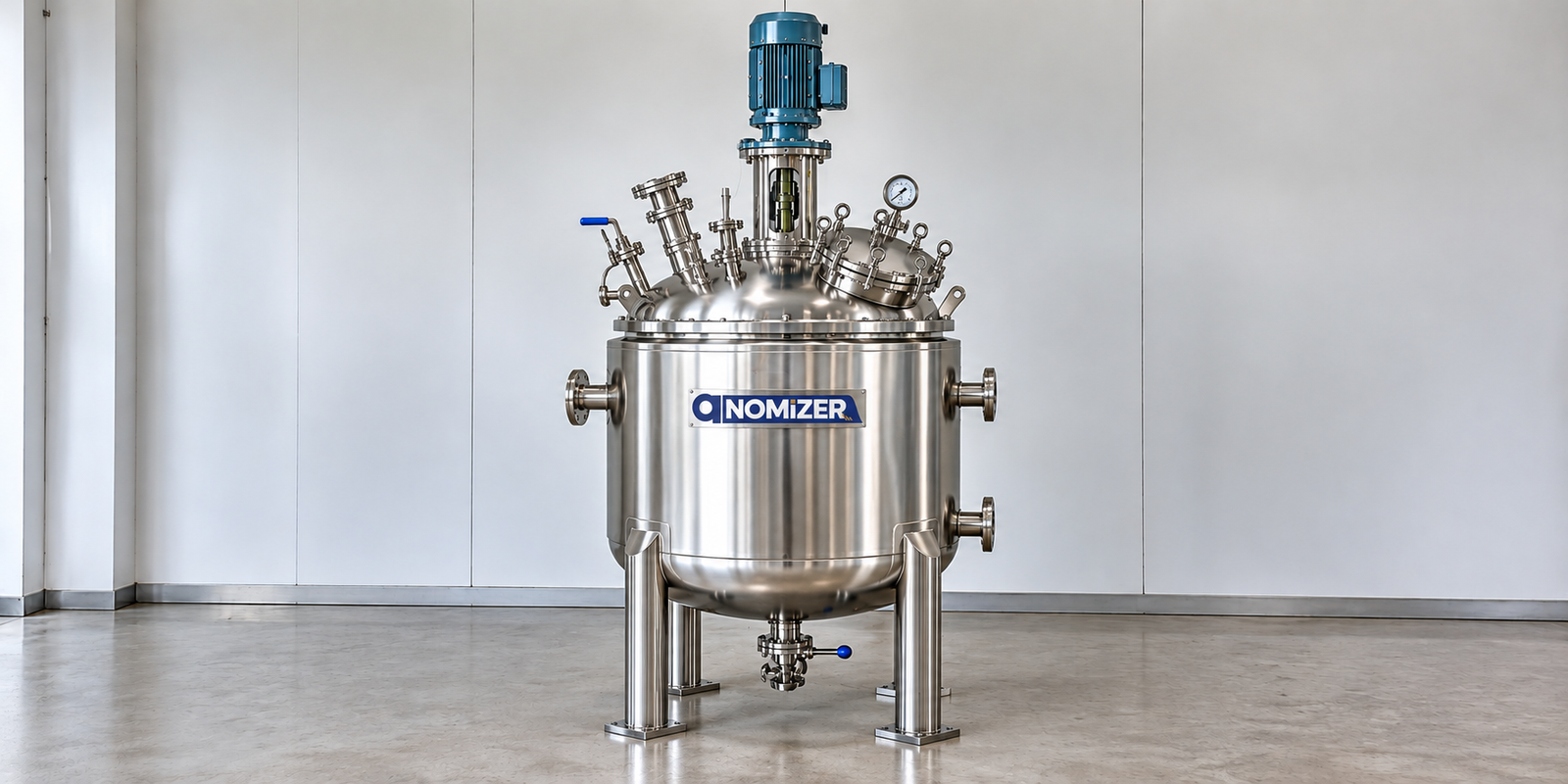
A typical setup has a motor and agitator shaft mounted on top, a jacketed shell running the length of the body, nozzles for charging materials, and a bottom outlet for discharge. Depending on what's being made, you'll also see reflux condensers, manways for cleaning between batches, sight glasses so operators can actually see what's happening inside, and pressure relief devices for anything running above atmospheric.
Why Stainless Steel Is Used for Reaction Vessels
Glass-lined vessels get specified for genuinely nasty chemistry — strong acids, media that would eat through anything else. But for most chemical, pharmaceutical, and food-grade work, stainless steel wins, and not by a small margin. SS304 covers general-purpose reactions where corrosion isn't aggressive. Once chlorides or acids enter the picture, SS316L is the safer call.
What makes stainless the default choice isn't just corrosion resistance:
- It handles thermal shock better when a batch goes from cold charge to rapid heat-up
- It's mechanically stronger, so larger vessels and higher pressures are workable without over-engineering the shell
- Fabricators can add custom nozzles, baffles, and mounting points without the material fighting them
- Properly passivated, a stainless vessel keeps running for years with fairly minimal upkeep
None of this makes glass-lined obsolete — it just means stainless covers the majority of applications and glass gets reserved for the cases that genuinely need it.
Reaction Vessel Price: What Affects the Cost?
Vessel capacity spans a huge range — a few liters on a lab bench, several thousand liters on a production floor. But raw volume is the easy part of sizing. The harder part is getting the height-to-diameter ratio, agitator horsepower, and jacket surface area to actually match the reaction's heat transfer needs. Oversize the vessel and you're burning energy heating and cooling dead space. Undersize it and mixing suffers, throughput drops, and you're running more batches than necessary. This is exactly the kind of thing worth modeling with a fabricator before committing to a design — it's a lot cheaper to fix on paper than after the vessel is welded.
Finding a Reaction Vessel Manufacturer in India
India has quietly become one of the bigger hubs for process equipment fabrication, supplying not just domestic pharma and chemical plants but export markets across the Middle East, Africa, and Southeast Asia. Not every manufacturer in that space is equally reliable, though. A few things worth checking before signing off on a supplier:
- Fabrication standards — ASME or an equivalent pressure vessel code, with welding procedures documented and materials traceable back to source.
- Willingness to customize — off-the-shelf vessels rarely match a real process exactly. Can the manufacturer actually change agitator design, jacket configuration, or nozzle placement, or are you stuck with the catalog?
- Support after delivery — spares, installation help, and for pharma buyers specifically, validation paperwork that will hold up during an audit.
- Testing before it ships — hydro-testing, surface finish checks, material certificates. Ask for these; don't assume they're included.
At Anomizer.com, vessels get built around the actual reaction chemistry a client brings in, not adapted from a generic template. That distinction tends to be the difference between a vessel still performing well ten years in and one that needed replacing after three.
What Actually Drives Reaction Vessel Price
There's no single number to quote here — price moves with capacity, material grade, jacket type (dimple jacket versus a conventional one), agitator specification, and whatever instrumentation gets added, from pressure gauges to level sensors to ports meant for automation down the line. An unjacketed SS304 vessel for lab or pilot work costs a fraction of a fully jacketed SS316L production unit with variable-speed drive and PLC integration — comparing the two on price alone doesn't really mean anything. When quotes come in, ask for the base vessel cost broken out from accessories, otherwise you're not comparing suppliers, you're comparing bundles.
One thing worth being direct about: the cheapest quote is rarely the best deal. Shell thickness gets thinned, weld quality gets cut, stress-relief treatment gets skipped — all of it shaves cost off the invoice while shortening how long the vessel lasts and raising the odds of a failure under pressure.
A supplier worth working with will walk you through exactly what's in the price and why a given spec matters for your process, rather than just handing over a number.
Looking for a Reaction Vessel Manufacturer That You Can Depend On?
Choosing the right reaction vessel will affect the efficiency, temperature control, mixing, safety, and cost of operation. The reaction vessel should be tailored to meet your process requirements of operating temperature, pressure, chemical resistance, batch size, material grade, and mixing.
If you need a Reaction Vessel Manufacturer for a custom industrial process, Anomizer can assist you in selecting and configuring a reaction vessel that meets your process requirements.
Contact Anomizer now to talk about your reaction vessel requirements and get a quote for a custom-designed vessel.