



Here's something nobody tells you when you install an RO purifier: the purifier itself is only half the job. The other half — the part people almost always overlook — is the tank sitting quietly underneath, holding the water until you're ready for it. I've worked with water storage products for over a decade now, and if there's one lesson that keeps repeating itself, it's this: a great purifier paired with a bad ro storage tank still gives you bad water. At Anomizer, we run into this all the time — someone spends good money on a top-tier RO system, then grabs whatever cheap tank was lying around, and wonders why the water tastes off three months later.
So let's actually talk about this properly.
Why the Tank Is Doing More Work Than You Realize
RO purification isn't instant. Water gets pushed through the membrane slowly, drop by drop really, and it needs somewhere to collect until you turn the tap. That "somewhere" is your ro water storage tank. Skip it or get a bad one, and you're either waiting around for water or, worse, storing it somewhere that's quietly contaminating it while you're not looking.
I've seen tanks that leach a plasticky smell into the water within weeks. I've seen seals so loose that dust and even small insects got in. None of this is dramatic or obvious at first — it just slowly makes your "purified" water not-so-purified anymore.
The Different Types of Tanks (And Why Mixing Them Up Is a Mistake)
People sometimes assume a tank is a tank. It's really not.
Plastic and polyethylene tanks are what most homes use, and for good reason. Plastic water storage tanks, especially polyethylene water storage tank varieties made from food-grade material, are light, cheap-ish, and don't react with water. If you're buying for a kitchen setup, this is probably your default.
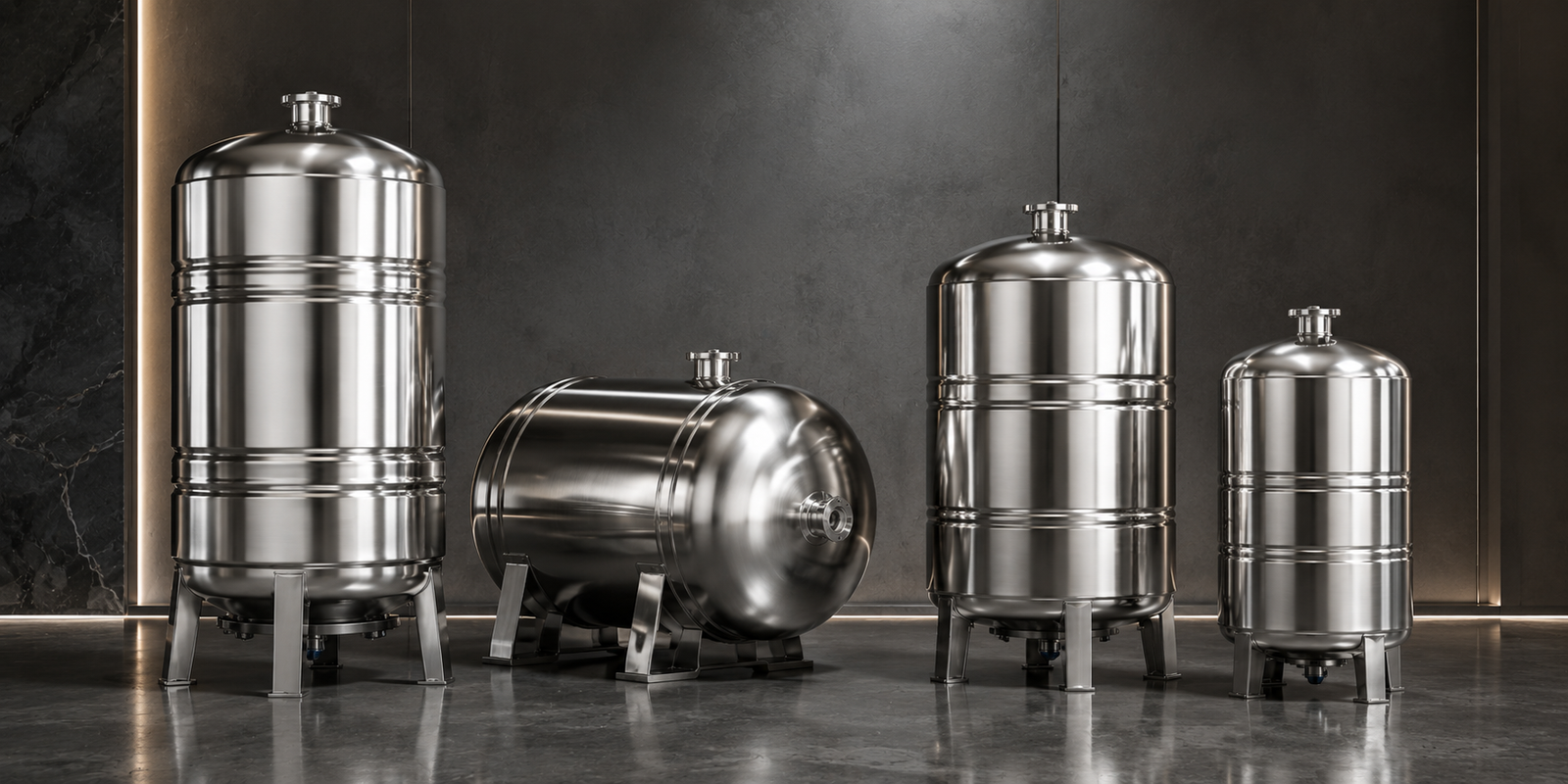
Stainless steel is the step up. An ss storage tank costs more but resists rust and microbial buildup far better, especially in humid climates or commercial kitchens where things get used hard, daily.
Now here's where people get confused — and this matters. Chemical storage tanks are an entirely different animal. They're lined for acids, solvents, reactive industrial liquids. Same goes for a diesel storage tank or oil storage tank — built to completely different safety codes, for combustible, non-potable liquids. Do not, under any circumstance, assume these are interchangeable with drinking water tanks. They're not even close.
Then there's hot water storage tank units, insulated to handle heat without warping, and garden water storage tanks, which are the outdoor cousins — UV-resistant, weatherproofed, usually bigger since they're feeding irrigation rather than a kitchen tap.
Okay, But What Size Do You Actually Need?
For most families — four or five people — something in the 10 to 15-litre range covers daily drinking and cooking comfortably. Bigger households, or small offices, might want to bump that up to 20 litres.
Separately, if you're thinking bigger picture — like backup storage for water shortages, not just RO output — it's worth checking the water storage tank 1000 litre price range. That's a different category entirely from your under-the-counter RO tank, but a lot of households end up needing both.
What to Actually Check Before Buying
Not all domestic water storage tanks are created equal, and honestly, the label "food-grade" gets thrown around loosely. Here's what I'd actually look for:
- Food-grade, BPA-free material — verified, not just claimed
- A tight-sealing lid (dust and insects are more common than people think)
- UV stabilization if it's anywhere near a window or sunlight
- Anti-microbial inner lining
- Wide enough mouth that you can actually clean it, not just rinse it
Talking Price Honestly
Water storage tank price ranges vary a lot, and cheaper isn't automatically worse — but it's often a signal. Basic plastic RO tanks are genuinely affordable and fine for most homes. Steel or specialty tanks cost more upfront but tend to last longer, so the math evens out over a few years. My honest advice: don't shop purely on price. Check for certification, warranty terms, and whether the brand actually stands behind the product — that's where a name like Anomizer tends to matter more than people expect going in.
Maintenance — The Boring Part Nobody Wants to Do
- Clean the tank every 3–4 months, regardless of how clear the water looks.
- Check valves and inlets for leaks or scale buildup.
- Keep it out of direct sunlight — algae loves a warm, sunlit tank.
- If you notice odor, discoloration, or cracking, replace it. Don't wait.
Ready for a Tank That Actually Does Its Job?
Your purifier can only be as good as the tank storing its output — that's really the whole point of this article. If your current setup is leaving a weird smell, slow flow, or you're just not sure your tank is food-grade at all, it's worth fixing sooner rather than later. Anomizer's range of certified RO storage tanks is built specifically to solve this — safe materials, real durability, no guesswork. Get in touch with our team and we'll help you find the right fit for your home.