


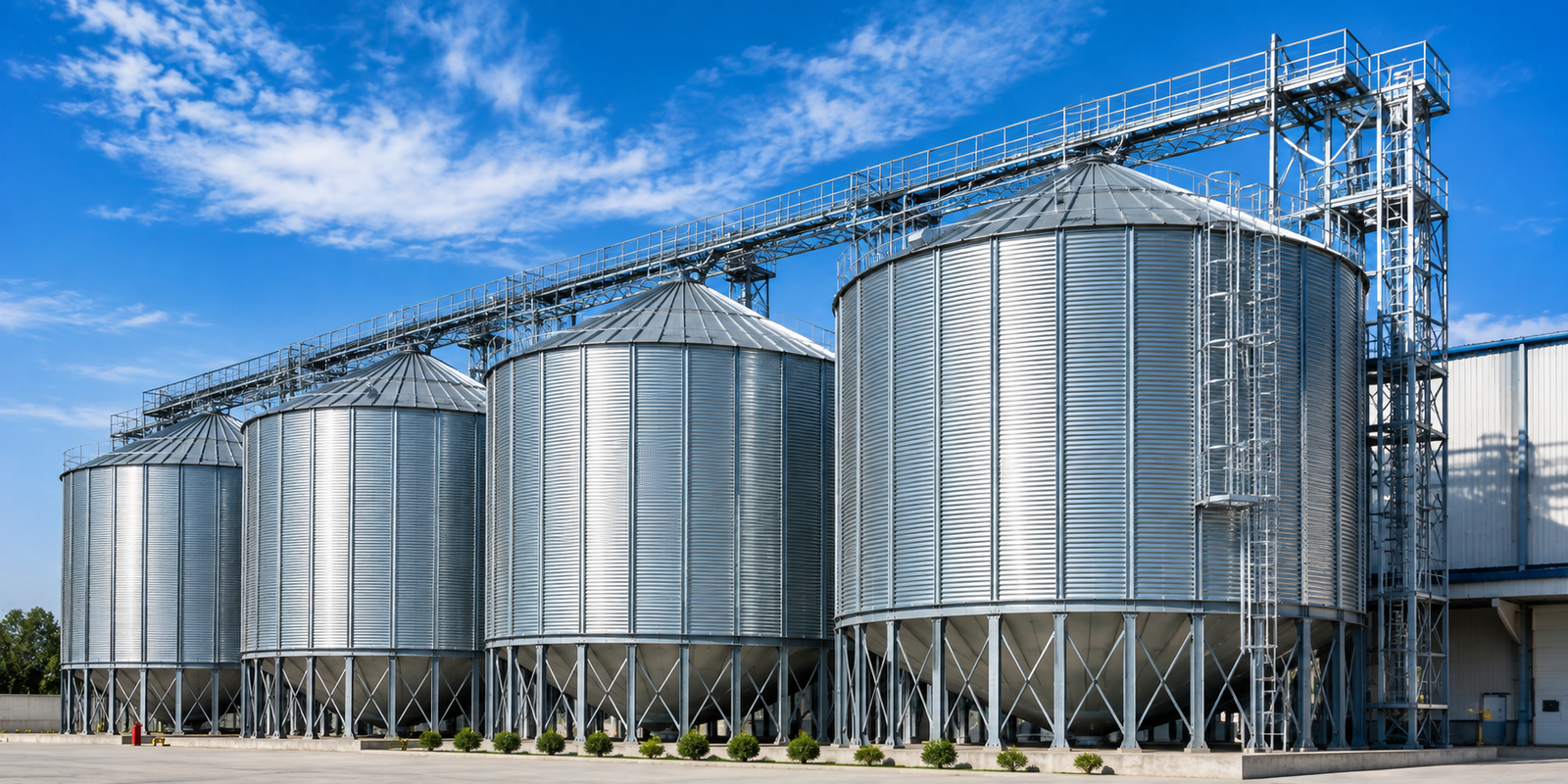
Walk up to any grain terminal, cement plant, or feed mill and you'll spot them from a mile away — tall steel cylinders standing guard over tons of material. Most people glance right past them. But if you've ever had to actually buy one, you know these aren't just "big metal tanks." They're precision-engineered systems, and honestly, the manufacturer you pick will quietly shape your operation for the next couple of decades, whether you think about it that way or not.
At Anomizer, we've sat across the table from enough plant owners, procurement heads, and site engineers to know one thing for certain: the silo purchase decisions that go wrong almost never go wrong because of price. They go wrong because someone picked a manufacturer who didn't ask enough questions upfront. So let's talk about what actually matters when you're evaluating storage silos manufacturers — no fluff, just the stuff we've learned the hard way.
Why This Decision Deserves More Than a Quick Comparison
Here's the thing about a silo — it isn't something you replace next year if it disappoints you. It sits there, holding your product (and your money) day after day. A structural miscalculation, a poorly designed discharge cone, or cheap-grade steel can mean bridging, contamination, or in worst cases, structural failure. None of that is theoretical; we've seen it happen to businesses that trusted the wrong quote.
Good storage silos manufacturers don't just weld steel into a cylinder. They study how your specific material behaves — does it clump, does it flow freely, is it moisture-sensitive, does it need aeration? Cement doesn't behave like grain, and grain doesn't behave like sugar or fly ash. If your manufacturer isn't asking about your material before quoting you a price, that's a red flag worth noticing.
What Actually Separates Good Manufacturers From Average Ones
A lot of this comes down to habits you can't see in a brochure.
Customization is the first thing. The manufacturers worth working with won't hand you a standard catalog size and call it a day — they'll walk through your throughput needs and recommend bolted, welded, or hopper-bottom designs based on what actually fits your operation, not what's easiest to fabricate.
Then there's the steel itself. Grade, thickness tolerance, coating quality — these details rarely make it into a sales pitch, but they're the difference between a silo that lasts fifteen years and one that lasts forty. Ask directly. A confident manufacturer won't dodge the question.
In-house fabrication matters more than people realize too. When a manufacturer outsources critical components, quality control gets murkier, and so does accountability if something goes wrong later.
And don't underestimate after-sales support. Silos need periodic inspection — dust buildup, corrosion checks, structural monitoring. A manufacturer who disappears after installation leaves you scrambling when something needs attention.
Finally, safety compliance isn't optional, especially for combustible materials like flour or grain dust. Wind load, seismic considerations, dust explosion protocols — these aren't checkbox items, they're what keeps your team safe.
The Growing Reputation of Silo Manufacturers in India
Something worth mentioning: silo manufacturers in India have come a long way over the last decade. Post-harvest loss reduction efforts pushed serious investment into modern grain storage, and the construction boom kept cement silo demand climbing steadily alongside it.
What's interesting is how Indian manufacturers earned attention beyond domestic borders. Skilled engineering talent combined with competitive fabrication costs made silo manufacturers in India genuinely appealing to buyers across the Middle East, Africa, and Southeast Asia — and the quality has kept pace with that demand, not lagged behind it.
We're proud to be part of that shift at Anomizer. We've worked hard to match international engineering standards without pretending you need an international budget to get there.
Getting to Know Your Silo Types
If you're new to this, a quick primer helps before you get into conversations with any silo manufacturers.
Bolted silos tend to be the practical choice — cost-effective, transportable in panels, and quicker to erect on-site than most alternatives. Welded silos, on the other hand, offer tighter structural integrity and better airtightness, which matters a lot if you're storing something fine or moisture-sensitive. Hopper bottom designs use gravity to fully discharge material, cutting down on residue buildup, while flat bottom silos suit large-volume, long-term storage where floor access is a priority.
None of these is universally "better" — it genuinely depends on what you're storing and how you're moving it.
Questions Worth Asking Before You Commit
Before you sign anything, push a little. Ask how long they've actually been in this business, and ask for real client references, not just case studies pulled from a website. Ask whether they'll share structural design calculations and relevant certifications. Ask about warranty terms in plain language. And ask how fast they can get a service team on-site if something needs fixing.
A manufacturer who's confident in their engineering won't flinch at any of this. If they do, take that as your answer.
Let's Build Something That Actually Holds Up
Choosing among storage silos manufacturers doesn't need to feel like a gamble. Get the right partner involved, and your storage investment ends up protecting your product and your bottom line for years, not just surviving the warranty period. At Anomizer, we bring engineering precision and a genuine willingness to get into the details with you — because that's usually where good decisions get made.
Reach out to Anomizer for a free consultation and a custom silo design quote. Let's build storage that's actually built for how you work.