


A pressure vessel holds gases or liquids at pressures well above the surrounding atmosphere. It sits quietly in a chemical plant or refinery until something goes wrong, and that risk is why pressure vessel fabrication is treated as a specialized discipline, not ordinary metal fabrication.
At Anomizer, we work with fabricators, EPC contractors, and plant engineers across India who need vessels that hold up in real service, not just on paper. Below is a practical look at how these vessels are built, tested, and documented.
What Pressure Vessel Fabrication Involves
Fabrication runs through design calculations, material selection, plate rolling, welding, stress relieving, inspection, and testing. Skip a stage and the vessel can look finished while hiding a real weakness.
Most Indian fabricators follow the ASME Boiler and Pressure Vessel Code, alongside Indian Boiler Regulations (IBR) where applicable. These codes exist because every rule, minimum thickness, weld joint efficiency, nozzle reinforcement, traces back to a real past failure.
Types of Pressure Vessels
Vessels are grouped by function:
- Storage vessels – hold LPG, ammonia, or compressed air at stable pressure.
- Process vessels – reactors, separators, and columns handling changing pressure and temperature.
- Heat exchangers – combine pressure containment with thermal transfer.
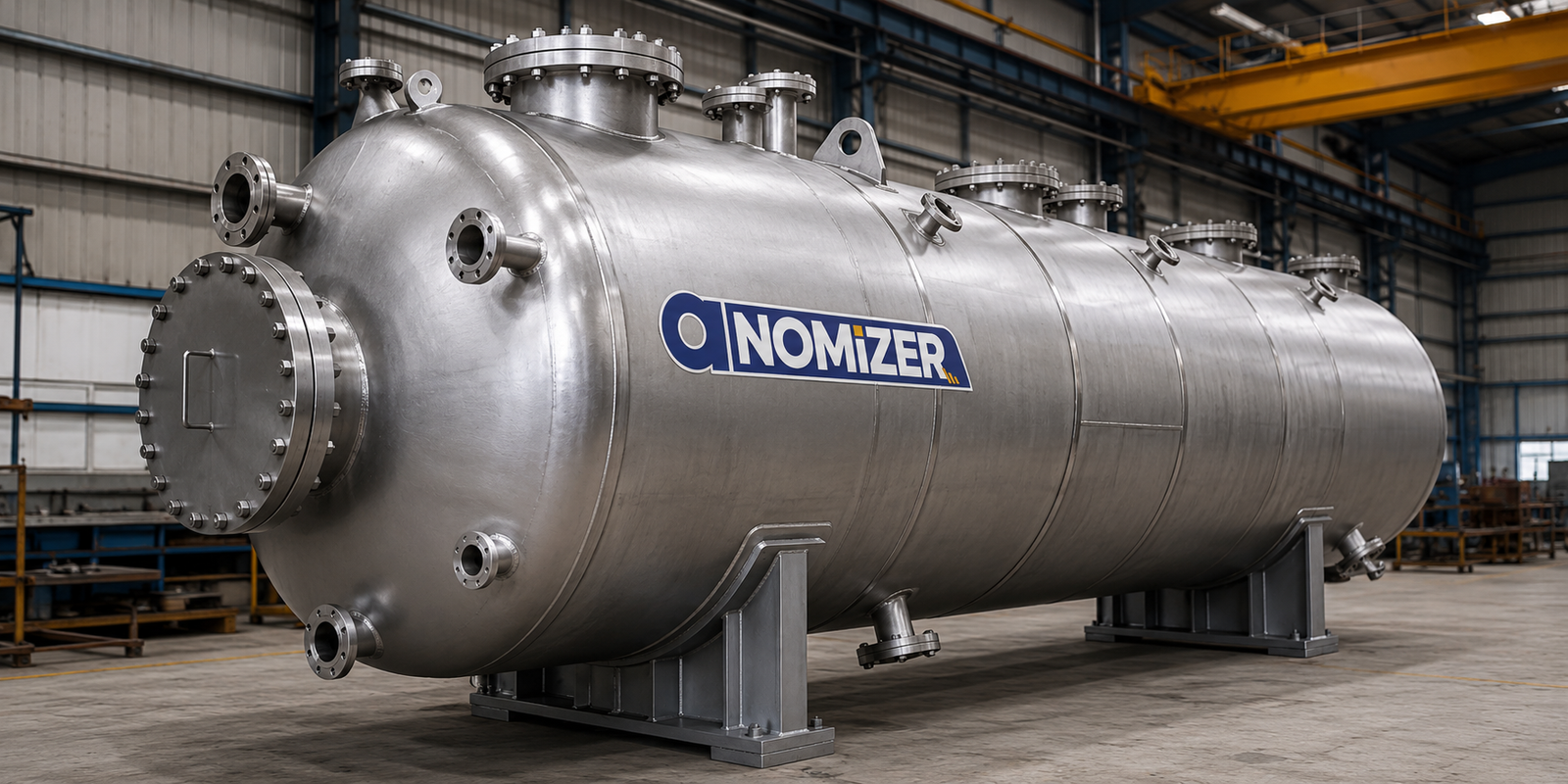
The most common shape is the cylindrical pressure vessel with hemispherical ends. The cylindrical shell rolls easily from plate, while hemispherical (or ellipsoidal) heads spread internal pressure evenly, avoiding the stress points flat ends create. That's why gas cylinders, LPG bullets, and reactors share this shape.
A high pressure vessel needs tighter tolerances, higher-grade steel, and more rigorous testing than a standard pressure vessel tank. Classification always comes before fabrication begins.
Pressure Vessel Thickness Calculation
Wall thickness is the most consequential number in the design. Too thin risks rupture; too thick adds weight, cost, and weld stress.
The calculation uses design pressure, vessel diameter, allowable material stress, and weld joint efficiency. ASME Section VIII, Division 1 sets the standard formulas. If material certification or weld radiography is inaccurate upstream, the thickness calculation is unreliable even when the math is correct.
Pressure Vessel Drawing and Diagram
A pressure vessel drawing is the single reference every stakeholder works from. A proper pressure vessel diagram shows shell and head dimensions, nozzle locations, supports, materials, weld types, and the governing code. Skipping detailed drawings creates documentation gaps that surface later during inspection or insurance review.
Hydrostatic Testing
A hydrostatic test for pressure vessel integrity is mandatory before commissioning. In a pressure vessel hydrotest, the vessel is filled with water, pressurized to roughly 1.3–1.5 times design pressure, and held while inspectors check for leaks or deformation.
Water is used because it's nearly incompressible, so a failure during testing releases far less energy than a gas failure would. This step proves the vessel under real pressure, not just on paper.
Why Fabrication Partner Choice Matters
A fabricator can have skilled welders and still deliver a non-compliant vessel if design calculations or documentation fall short. Experienced buyers check code certifications, welder qualifications, and inspection history, not just price and lead time.
Anomizer delivers that full picture: engineered design, code-compliant fabrication, and documented testing.
Talk to Anomizer About Your Next Pressure Vessel
If you're planning a new vessel, evaluating a fabricator, or need a design reviewed against ASME or IBR requirements, Anomizer's engineering team can walk you through it. Get in touch for a design consultation or a fabrication quote, and we'll help you specify a vessel that's built right the first time.
[Request a Quote from Anomizer →]