


Choosing a reaction vessel is not a decision to rush. Get it wrong and you inherit inconsistent batches, unplanned downtime, and compliance problems that follow you for years. Get it right, and the vessel quietly does its job for decades. For a procurement manager sourcing equipment in Gujarat, an EPC contractor bidding on a plant in Dammam, or a factory owner replacing an old reactor line in Nairobi, the reaction vessel selected today shapes product quality and safety tomorrow.
A reaction vessel is essentially a closed or semi-closed tank built to hold a chemical, thermal, or mechanical reaction under controlled temperature, pressure, and agitation. It shows up everywhere: chemical plants, pharmaceutical facilities, paint and resin manufacturing, cosmetics production, and food processing lines. Anywhere a reaction needs to happen the same way, batch after batch, a reaction vessel is doing the work.
This guide walks through how these vessels work, the common types, the specifications that actually matter, and what to check before placing an order.
What Is a Reaction Vessel?
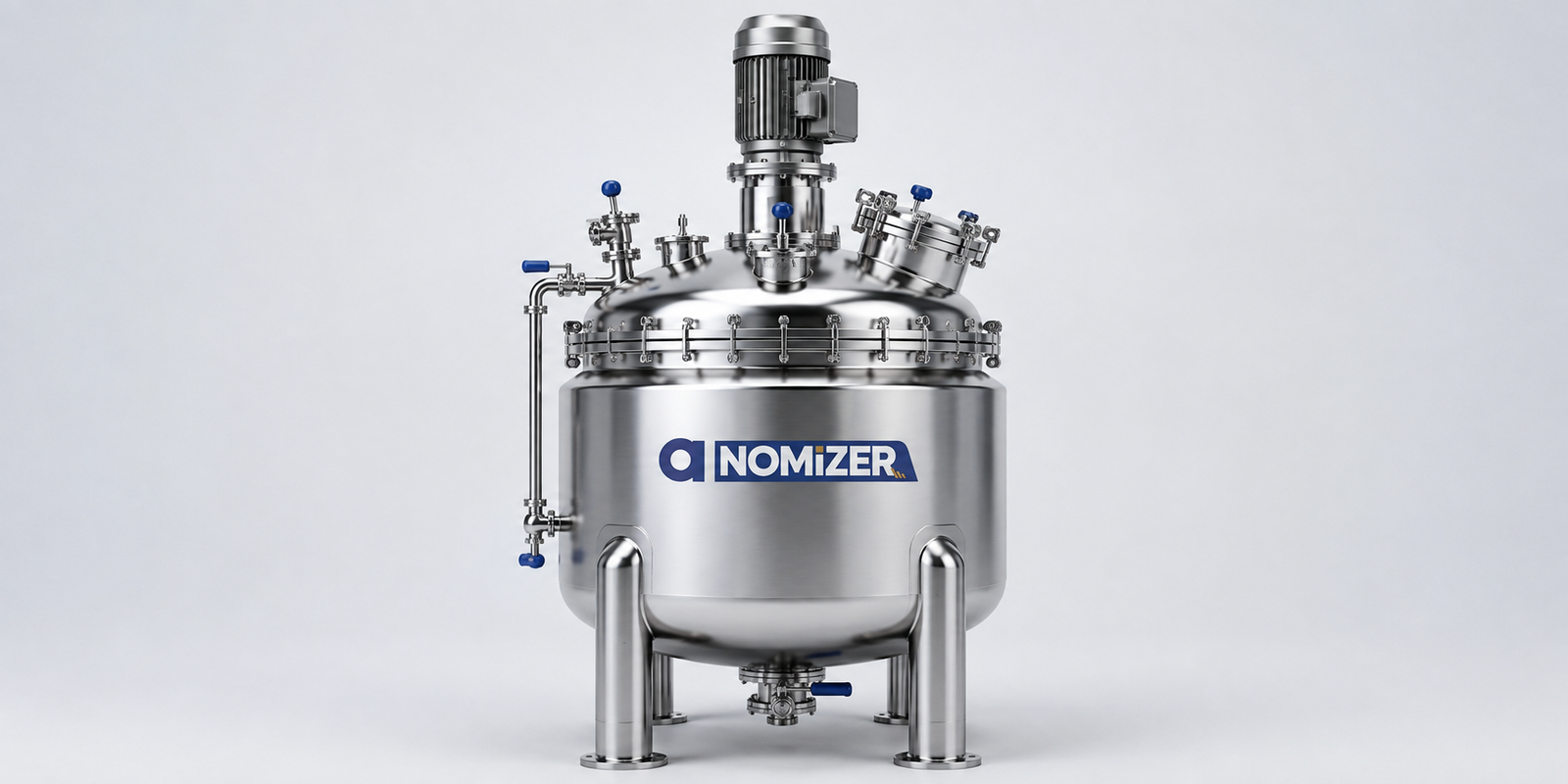
A reaction vessel, sometimes called a reactor vessel or reaction tank, is a pressure-rated or atmospheric container that holds raw materials while a reaction takes place under monitored conditions. Most designs include a jacket for heating or cooling, an agitator for mixing, and nozzles for charging, sampling, and discharge.
Stainless steel is the standard material of construction, usually SS 304 or SS 316L, chosen for corrosion resistance, a hygienic internal finish, and broad chemical compatibility.
How It Works
The operating principle is simple even though the engineering behind it isn't. Raw materials are charged through top or side nozzles, either manually or through pumps. A jacket around the vessel circulates steam, hot oil, or chilled water to bring the batch to the right temperature. An internal agitator — anchor, paddle, turbine, or propeller — keeps the mix uniform and supports heat transfer. Sensors track temperature and pressure, and sometimes pH, through the cycle. Once the reaction is complete, the product drains through a bottom outlet into a receiving vessel or packaging line.
Because this cycle repeats continuously, small design choices — wall thickness, jacket type, agitator selection — end up having an outsized effect on cycle time and batch consistency.
Types of Reaction Vessels
Not every process needs the same configuration. Jacketed reaction vessels use a surrounding jacket for heating or cooling and remain the standard choice for temperature-sensitive reactions. Pressure reaction vessels are rated for reactions that generate or require elevated internal pressure. Mixing reaction vessels are built more for blending and homogenization than for reaction chemistry itself. Pharmaceutical reaction vessels follow GMP requirements, with mirror-polished internals and minimal dead zones. Process reaction vessels serve general industrial applications, and custom reaction vessels are engineered around a specific volume, pressure rating, agitator, and nozzle layout for a unique application.
What to Look For
A few features separate a well-built vessel from a mediocre one:
- Construction in SS 304 or SS 316L
- A jacket type suited to the heating or cooling load — dimple, half-pipe coil, or conventional
- An agitator matched to product viscosity
- A mirror-polished finish where hygiene matters
- Safety fittings such as relief valves and rupture discs
- Insulation on heated processes
- Certifications relevant to the target market
Where They're Used
Reaction vessels show up across pharmaceutical manufacturing (API synthesis, formulation, bulk drug production), paints and coatings (resin cooking, pigment dispersion, emulsion blending), petrochemicals (polymerization and synthesis), cosmetics (creams, lotions, emulsions), food processing (controlled cooking, blending, sterilization), and resin manufacturing (polycondensation and esterification).
Comparison at a Glance
|
Vessel Type |
Pressure Rating |
Typical Use |
Best For |
|
Jacketed |
Atmospheric to low |
Heating/cooling reactions |
Chemicals, resins, paints |
|
Pressure |
Medium to high |
Sealed, pressurized reactions |
Petrochemicals, polymerization |
|
Pharmaceutical |
Atmospheric, GMP |
API and formulation batches |
Pharma, biotech |
|
Mixing |
Atmospheric |
Blending, homogenization |
Cosmetics, food processing |
|
Custom |
Application-specific |
Tailored requirements |
OEMs, specialty manufacturers |
Specifications Worth Confirming
Before ordering, buyers should nail down the material of construction and grade, vessel capacity in litres or kilolitres, working and design pressure and temperature, jacket design and heat transfer area, agitator RPM and motor rating, nozzle schedule, surface finish, and applicable design codes such as ASME, IS, or PED depending on the destination market.
A Short Buying Checklist
- Confirm the MOC suits your process chemistry, with SS 316L for corrosive or pharma-grade work
- Verify the jacket design matches your heating or cooling medium
- Match the agitator to product viscosity
- Ask for material test certificates and welding records
- Confirm after-sales support and spare parts availability
- For export orders, check packaging and destination-country compliance
Mistakes Worth Avoiding
Some errors show up again and again: specifying SS 304 where SS 316L was actually needed, undersizing the jacket and stretching out cycle times, mismatching the agitator to viscosity, skipping pressure relief fittings, and overlooking after-sales service — which matters even more for buyers importing equipment across borders.
Keeping It Running
Routine care extends a vessel's working life. Inspect gaskets and seals for leaks, clean jacket lines to protect heat transfer efficiency, check agitator bearings and motor alignment, passivate stainless surfaces periodically, and keep instrument calibration records current.
Standards That Apply
Established manufacturers build to recognized codes — ASME Section VIII for pressure vessels, Indian Standards for domestic fabrication, and cGMP for pharmaceutical work. Buyers exporting to the GCC, Africa, Southeast Asia, or Europe should also check PED or other destination-specific requirements before finalizing an order.
Where the Industry Is Headed
Smart instrumentation is becoming common — IoT sensors that track temperature, pressure, and batch data in real time. Modular designs are making it easier to scale from pilot batches to full production, and automated CIP systems are increasingly expected in pharmaceutical and food-grade lines.
Final Word
A reaction vessel is more than a tank; it's the foundation of batch consistency, process reliability, and regulatory standing. Whether the requirement is a stainless steel vessel for pharmaceutical production or a pressure-rated reactor for petrochemical synthesis, the manufacturer behind it matters as much as the design itself.
Anomizer designs and supplies reaction vessels — jacketed, pressure-rated, and fully custom pharmaceutical-grade — for manufacturers across India, the GCC, Africa, Southeast Asia, Europe, and export markets worldwide. Get in touch for technical consultation, specifications, and pricing built around your process.
Need a high quality Reaction Vessel manufactured to your exact process requirements? Anomizer manufactures premium stainless steel, jacketed, pressure-rated and custom reaction vessels for the chemical, pharmaceutical, food, cosmetic and process industries. For professional technical support, custom design, affordable prices, and reliable manufacturing services for your company, call Anomizer today.