


Run out of water once during a dry spell or a pump breakdown, and you'll never look at a water storage tank the same way again. It's one of those things people ignore until they need it badly. Municipal supply gets cut for "maintenance." Monsoons bring pressure that's all over the place. Pumps fail at the worst possible time. A good tank is what stands between you and a genuinely bad day.
We've been in this space at Anomizer for years now, helping homeowners, farmers, and factory owners figure out what tank actually fits their situation — not just what's cheapest or what a salesman is pushing that week. Here's what we've learned, laid out plainly.
So Why Bother With a Storage Tank At All?
Think of it as insurance you can see. Your water supply isn't guaranteed to be reliable — very few supplies are, honestly — and a tank gives you a buffer so daily life doesn't grind to a halt every time something upstream goes wrong. Farms need it to survive dry months. Factories need consistent flow to keep production lines moving. Homes just need water when someone turns the tap.
The Main Types You'll Come Across
Every property is different, so naturally, water storage tanks aren't one-size-fits-all.
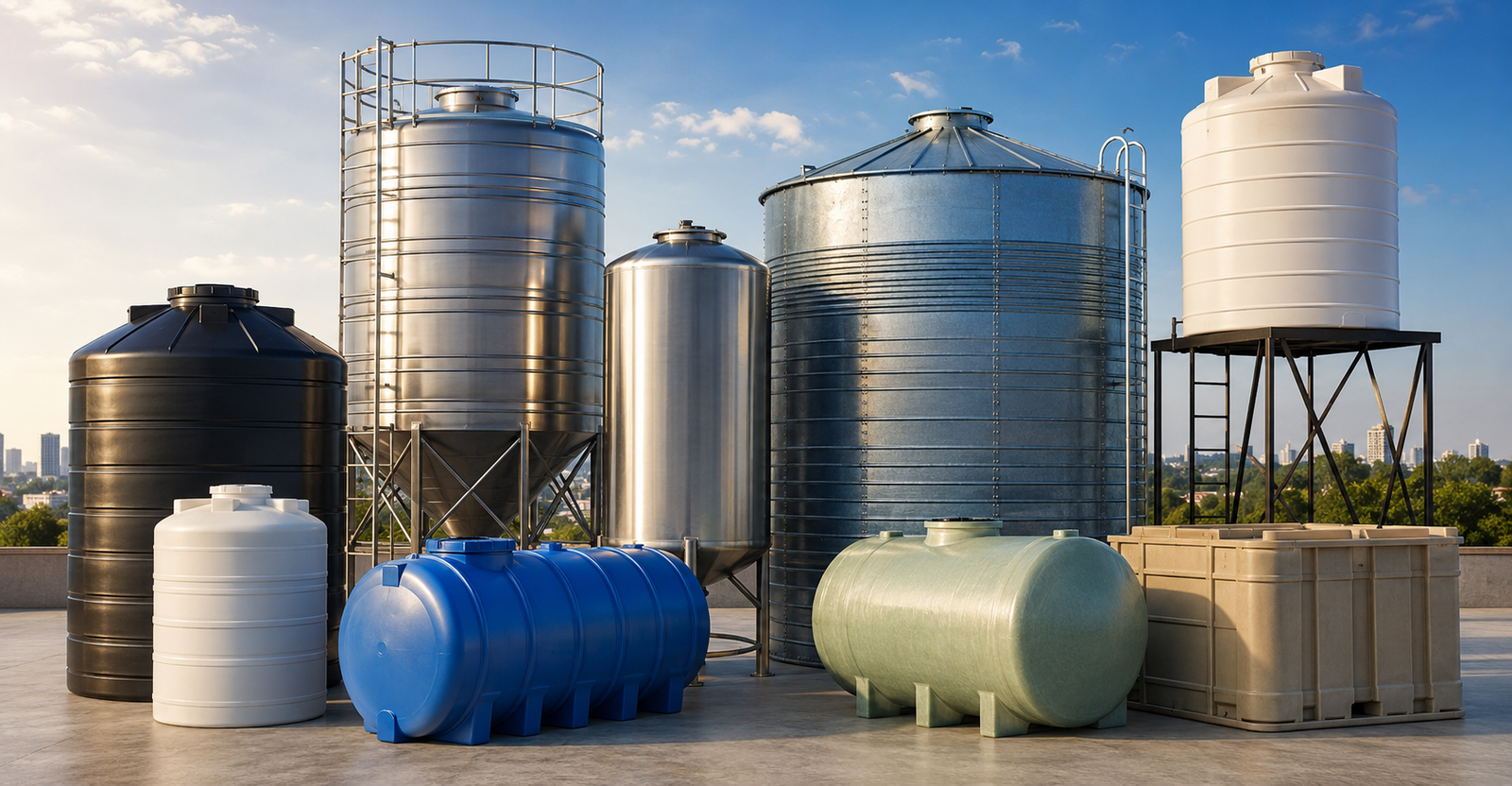
Above ground water storage tanks are what most people picture first, and for good reason. No digging, no excavation costs, and you can inspect or repair them without much fuss. If you've got the space and want something budget-friendly, this is usually the starting point.
Underground water storage tanks solve a different problem — space. Buried tanks free up your yard, keep water noticeably cooler, and cut down on algae growth since sunlight never reaches them. The trade-off is installation cost and needing proper access points for maintenance down the line.
Then there's the vertical water storage tank, built for people who don't have floor space to spare but do have height to work with. Rooftops and narrow terraces are where these shine — you get real capacity without eating into usable ground area.
Material Matters More Than People Realize
The tank's shell decides how long it lasts and what it's actually safe to store.
Steel water storage tanks are the workhorse option, especially in industrial and farm settings. They handle large volumes and, with the right coating, resist corrosion for decades. Not glamorous, but dependable.
If hygiene is non-negotiable — dairy operations, pharma, anything food-related — a stainless steel storage tank earns its higher price tag. It won't leach anything into the water, it's easy to clean properly, and it holds up under strict quality checks far better than cheaper alternatives.
For actual drinking purposes, don't just grab any tank off the shelf. A proper drinking water storage tank uses food-grade material specifically so bacteria doesn't build up and contamination doesn't creep in over time. This one's worth spending a bit more on.
And for industries dealing with corrosive substances, FRP chemical storage tanks — fiberglass reinforced plastic — are the practical choice. Lighter than metal, immune to rust, and built to handle chemicals that would eat through less specialized materials.
Picking a Supplier Without Getting Burned
The tank matters, but so does who you buy it from. A lot of people skip this step and regret it later. Before signing anything with a storage tank supplier, check a few things:
- Do they actually disclose the material and grade honestly, or are they vague about it?
- Is there a real warranty, or just a verbal promise?
- What do past customers say — not the testimonials on their website, but independent reviews?
- Have they been doing this long enough to have a track record?
Among the many water storage tanks manufacturers in India, the ones worth trusting are the ones that don't dodge these questions. At Anomizer, we only work with manufacturers who pass this kind of scrutiny, because a tank failure six months in isn't something you want to deal with.
Keeping Your Tank Working Properly
- Clean it roughly every six months — sediment and algae build up faster than most people expect.
- Look for rust spots or hairline cracks, particularly on steel tanks.
- Keep it sealed so no sunlight or debris can get into it.
- If it is buried, check the seals and access points once a year.
- If the water is used for drinking, test it from time to time.
Talk to Someone Who Actually Knows Tanks
A water storage tank isn't a purchase you want to rush or get wrong — it affects your water quality, your household routine, and your peace of mind for years. Whether you need something simple for your home, a stainless steel setup for a food business, or FRP chemical storage tanks for an industrial site, Anomizer can help you land on the right one.
Reach out to Anomizer today, and let's find the tank that actually fits what you need — not just what's easiest to sell you.