



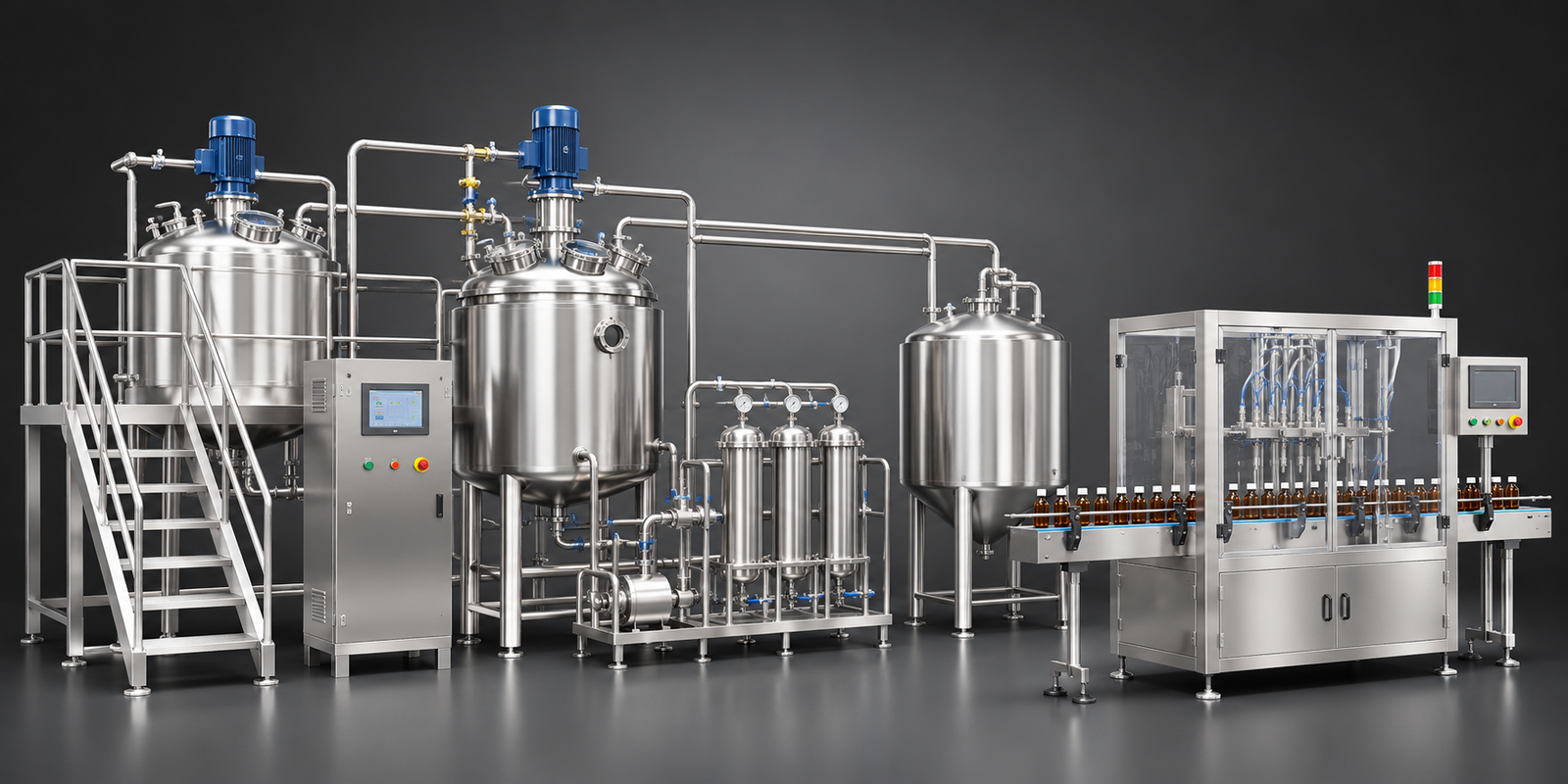
A pharmaceutical liquid mixing plant is where your syrup, suspension or elixir actually gets made. APIs, sugar, water, preservatives and flavours go in as separate ingredients and come out as one uniform bulk, ready for filtration and filling. When this stage goes wrong, nothing downstream can rescue the batch. At Anomizer, we've seen the filling line blamed for problems that were really born in the mixing tank, so this guide stays focused on the mixing end of an oral liquid line and the choices that matter most there.
Why Mixing Is Harder Than It Looks
Picture three products running on the same floor. A sugar syrup is heavy and won't dissolve properly without heat. A suspension needs strong shear to break up powder, yet you can't let it whip in air. An alcohol-based elixir wants a sealed vessel so the solvent doesn't escape. Each one asks something different of the equipment.
So the first question isn't "what does the vendor have in stock?" It's "what exactly am I going to make, and how thick will it be?" Get that wrong and you'll be modifying tanks after installation, which nobody enjoys.
The Vessels at the Heart of the Plant
The syrup preparation tank comes first. It's normally a jacketed vessel in SS 316L, though SS 304 is sometimes accepted for parts that never touch the product. Steam or hot water in the jacket helps sugar dissolve, and chilled water brings the batch back down afterwards. For thick syrups, a scraper-type anchor agitator keeps material from baking onto the wall. If your formula uses powders that float or clump, add a high-speed disperser.
Next is the liquid manufacturing vessel, where the sugar syrup meets the active, preservatives and other excipients. Vacuum is worth paying for here. It cuts down foam and trapped air, which otherwise show up later as dosing variation. Suspensions and emulsions usually also need a homogeniser or a recirculation loop.
Then comes everything people forget to scrutinise: pumps, sanitary valves, flow meters, load cells and piping. This pharmaceutical liquid processing equipment looks minor on a quotation, but a badly routed pipe creates dead legs where product sits and microbes settle in. Ask for sloped, orbital-welded tri-clover lines with as few dead legs as possible.
Filtration and Filling
A liquid syrup filtration system sits between the mixing vessel and the filler. Most plants use a filter press or cartridge housings, stepping down through finer grades, say 5 micron and then 1 micron, depending on how clear the product has to be. Here's the catch: viscous syrup blinds filters fast. Size the pump and the filter area for the thickest batch you'll run, not the average one.
The automatic liquid filling line is the last stop. It typically handles bottle feeding, washing, filling, capping, labelling and sometimes tamper-evident sealing. Piston fillers cope well with thick syrups; volumetric or time-pressure fillers suit thinner liquids. Accuracy matters twice over. It keeps you inside label claim, and it protects yield, because a tiny overfill on every bottle adds up to a lot of lost product by the end of the month.
Putting the Whole Line Together
A full pharmaceutical oral liquid production line follows a fixed order: water and raw material dispensing, syrup preparation, main mixing, filtration, a holding tank, then filling, capping and labelling. Tie the stages to one PLC that logs temperature, agitator speed, hold times and transfer volumes, and your batch records almost write themselves at audit time.
An automatic syrup production line takes it a step further with valves and recipes controlled automatically. If you run many SKUs, stored recipes alone save operators a surprising amount of time and remove the risk of a wrong setting being typed in. To see how this works as a complete turnkey system, have a look at our liquid syrup manufacturing plant.
What to Check Before You Buy
Material and finish. Product-contact surfaces should be SS 316L, and internal roughness is commonly specified between Ra 0.4 and 0.8 micron. Electropolishing makes cleaning easier. Ask to see the material test certificates; a verbal promise isn't enough.
Regulatory fit. In India, your equipment has to support Schedule M compliance, and the CDSCO is where you check current rules. Exporting adds WHO-GMP, EU GMP or US FDA expectations. A serious vendor will hand over design documents, URS-based drawings and IQ/OQ support without being chased.
Cleaning. Find out whether the system supports CIP. Spray balls and properly sloped drains mean changeovers between products don't depend on someone scrubbing by hand.
Room to grow. Batch sizes rarely stay put. If a plant is sized exactly for today's demand, it may be a bottleneck in two years. Ask whether vessels can be swapped or the line extended later.
Service. Spares and local engineers decide whether a breakdown costs you an afternoon or a week. Dull question, real consequences.
Picking an Automatic Liquid Oral Syrup Processing Plant Manufacturer
Comparing quotations only gets you so far when you're choosing an automatic liquid oral syrup processing plant manufacturer. Ask whether they can show you machines running in live pharmaceutical facilities, not just workshop photos. Find out if design, fabrication, automation and commissioning happen under one roof or get outsourced. Ask if they'll run a factory acceptance test using something close to your product's viscosity. And ask what paperwork you actually receive at handover.
Anomizer builds liquid oral syrup processing equipment around the customer's formulation and batch size instead of pushing a fixed catalogue model. You can read about our automatic liquid oral syrup processing plant range if you want specifics. Yes, it adds a short design conversation at the start. It also avoids the all-too-common situation where a plant arrives and then needs rework because nobody discussed viscosity or heating profile.
Mistakes We Keep Seeing
Undersized filtration tops the list. After that come using one agitator type for every product, dropping vacuum to save money, and forgetting about utilities until installation day, whether that's steam pressure, chilled water or compressed air. All of these are cheap to fix on a drawing and painful to fix on site.
Final Thoughts
A well-matched mixing plant gives you steady batches, quicker cleaning and tidy audit trails. A badly matched one gives you rework and rejected lots that no filling line can undo. Put extra planning time into mixing and filtration, and the rest of the line tends to sort itself out.
Planning a new line or upgrading an old one? Send your product types, batch sizes and target markets through the Anomizer contact form and we'll suggest a configuration that fits.