
Quick answer: A cosmetic manufacturing plant in India typically costs between ₹8 lakh for a small startup setup and ₹5 crore or more for a full turnkey facility. The final figure depends on your product type, batch size, steel grade and automation level.
Ask five suppliers for a cosmetic manufacturing plant price and you will get five very different numbers. One says ₹12 lakh, another says ₹90 lakh. The gap is usually not about quality alone. It comes from what each supplier included in the quote and what they quietly left out. Anomizer works with first-time and expanding manufacturers, and the same pattern shows up in almost every enquiry we handle.
Why the Product Decides the Price
The product you plan to make decides the machine list, and the machine list decides the price. A cream plant, a shampoo plant and a lip balm plant need different equipment.
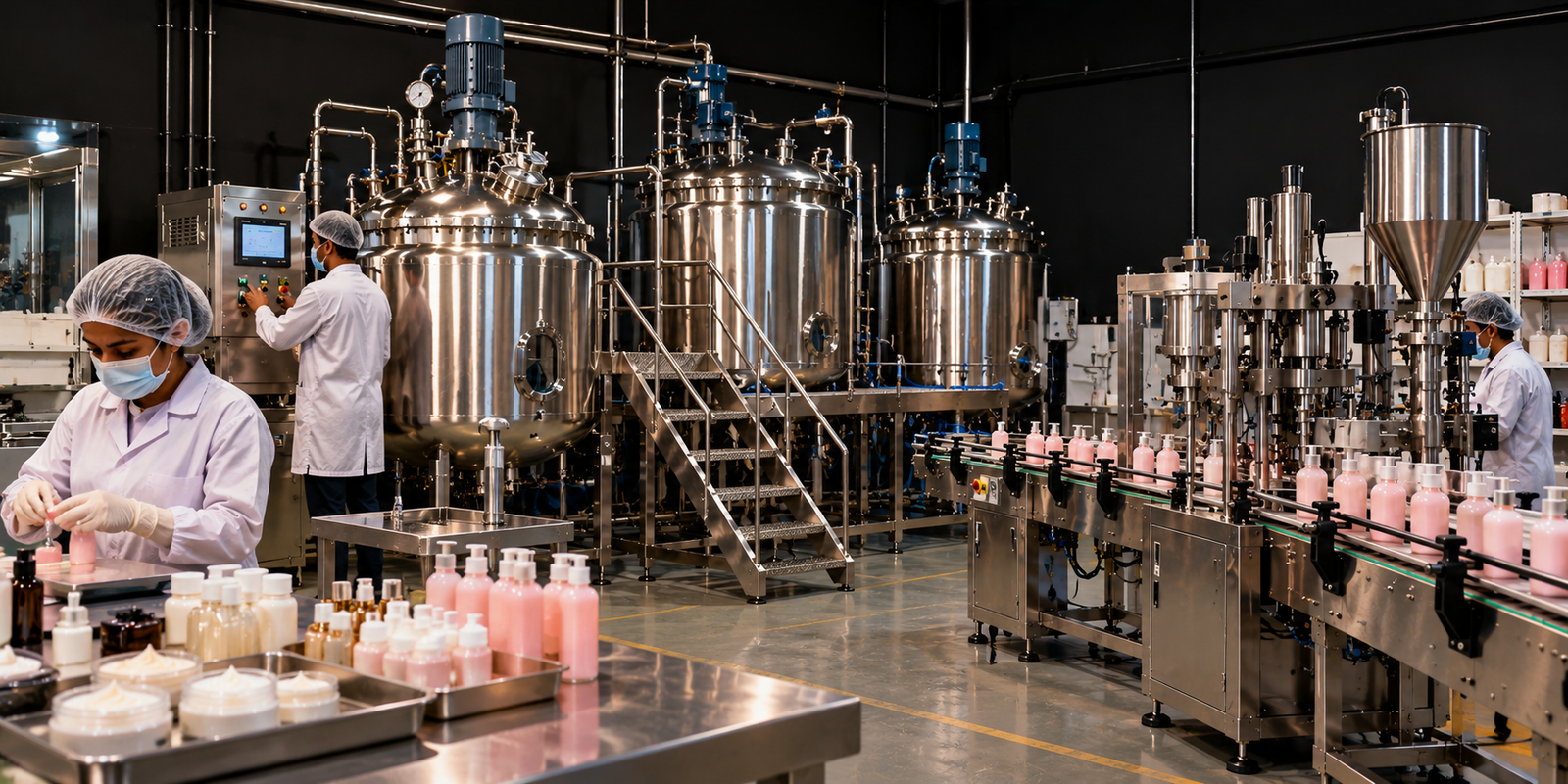
Creams and lotions need a vacuum emulsifying mixer with a homogenizer, along with separate heated vessels for the oil and water phases. Shampoos and face wash need gentler mixing and a good deaeration step, because trapped air ruins the look of the batch. Lip balms depend on melting tanks, moulds and cooling instead of high shear. If you also plan medicated creams or ointments, the same emulsifying logic carries over to an ointment manufacturing plant. A reliable cosmetic manufacturing plant manufacturer will ask which products you make before naming any number. If a supplier quotes on the first call, treat it as a guess rather than an offer.
Cosmetic Manufacturing Plant Price by Scale
Small R&D units run roughly ₹8 to 25 lakh, small commercial plants ₹30 to 80 lakh, mid-scale lines ₹80 lakh to 2 crore, and turnkey projects ₹1.5 to 5 crore or more.
|
|
|
|
|
|
|
|
|
|
|
|
|
|
|
|
|
|
|
|
These are planning ranges, not quotations. Steel rates, motor brands and automation can shift them noticeably. The lower end generally means semi-automatic operation and manual transfer, while the upper end brings PLC control, SS 316L contact parts and integrated filling.
What Moves the Cosmetic Manufacturing Equipment Price
Five things move the price most: material grade, homogenizer quality, vacuum and heating design, automation, and documentation.
Material grade matters because SS 316L costs more than SS 304, yet it resists corrosion from acidic formulas and salty actives. Using 304 everywhere to save money often shows up a year later as discolouration or rejected batches. The homogenizer is the heart of an emulsion plant, and a bottom-mounted unit with a proper rotor-stator gap gives finer droplets and a more stable product. Vacuum and jacket design affect oxidation and temperature control. Automation, such as a PLC with recipe storage, costs extra but gives repeatable batches. Finally, material certificates, calibration records and IQ/OQ documents add cost, but auditors and export buyers ask for them.
Setup Cost Versus Project Cost
Setup cost is the machinery alone. Project cost is everything needed to begin legal, saleable production, and it is usually close to double the machinery figure.
Many buyers use the two terms as if they meant the same thing, and that is where budgets break. A cosmetic manufacturing plant setup cost covers mixers, process vessels, pumps, piping and filling machines. The cosmetic manufacturing plant project cost also includes the building or shed work, a steam generator or boiler, compressed air, chilled water, an RO or DM water plant, HVAC and cleanroom works, effluent handling, licensing, stability studies and working capital for raw materials and packaging. In the projects we see, machinery tends to form about 40 to 55 per cent of the total. If a supplier's quote is the only number in your business plan, your real budget is probably missing half its size.
Why a Turnkey Plant Often Saves Money
A turnkey cosmetic manufacturing plant puts design, supply, installation, commissioning and training under one supplier, which usually prevents expensive compatibility mistakes.
On paper, turnkey looks pricier than buying machine by machine. In practice it often works out cheaper for new entrants. When you assemble the line yourself, nobody owns the gaps. The mixer outlet does not match the transfer pump, the filling machine runs slower than the batch tank can feed it, or the steam supply turns out to be undersized. Each of these becomes your problem, and you usually find out after the equipment has landed on site. With one accountable partner, the line is designed as a single system, from batch size to the packing table, and you get a start date you can plan around.
How to Judge a Cosmetic Production Line Manufacturer
Check for a running reference plant, a detailed bill of materials, GMP-friendly design, and real after-sales support before you sign.
Ask to see a working installation or speak with an existing customer. Request the drawings and confirm sheet thickness, motor and seal make, and homogenizer power. Cosmetic units in India follow the Drugs and Cosmetics Rules and BIS standards, and exporters often work to ISO 22716, so the equipment should make compliance easier. Clarify spares and service visits in writing, because a named support contact is worth more than a small discount. Where possible, run your own formulation on the machine before dispatch.
Choosing Cosmetic Manufacturing Machinery for the Second Year
Size your cosmetic manufacturing machinery for where you expect to be in twelve to twenty-four months, not just launch day.
If demand may double, pick a mixer that handles a wider batch range, or leave floor space and utility capacity for a second vessel. Retrofitting a tightly sized plant costs far more than choosing correctly at the start. Anomizer begins each project with your product list, target output and budget, then recommends a configuration instead of pushing a catalogue model. When you compare any cosmetic manufacturing plant supplier, that conversation should come before the price.
A Fair Way to Compare Quotes
Send every supplier the same written brief, then ask each one to list exclusions, so the quotes can be compared honestly.
Include product types, batch size, shifts per day, material grade, automation level and whether utilities are in scope. Identical inputs produce comparable quotes. The cheapest offer very often has the longest list of exclusions, and those items land on you later.
Planning a cosmetic plant? Share your product list and target batch size with Anomizer, and we will map out a configuration and a realistic budget before you spend on machinery.