


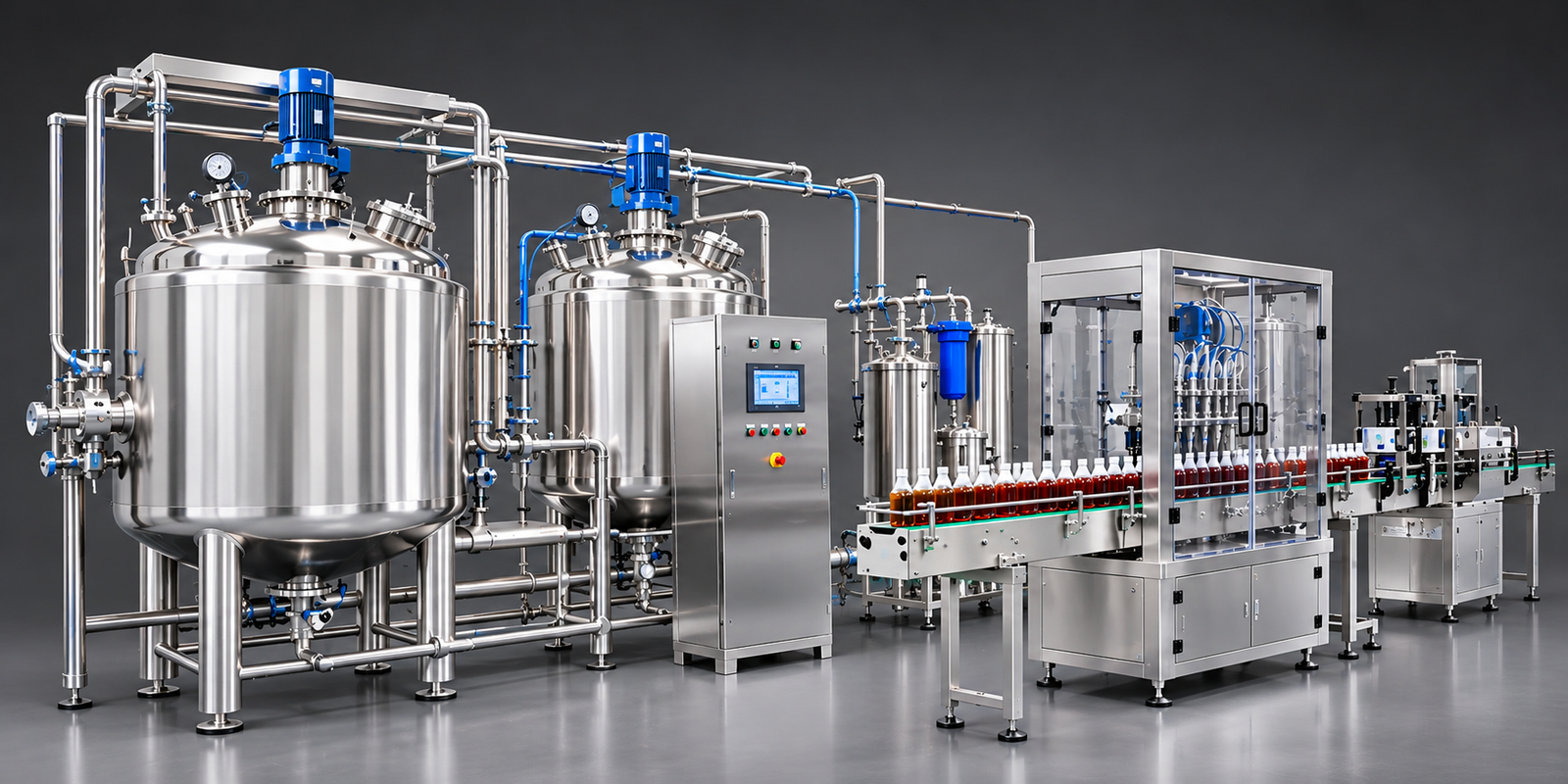
A turnkey liquid syrup manufacturing plant is a complete production line supplied, installed and commissioned by a single manufacturer. It covers syrup preparation, filtration, mixing, storage, filling and capping. Anomizer builds these plants in SS316 with GMP-compliant layouts and PLC control, from 500 litres to 5000 litres and beyond.
Most buyers who contact us have already seen what goes wrong with a split purchase: a tank from one vendor, pumps from another, and nobody responsible when the pieces do not work together. A turnkey setup removes that problem. This guide explains what is included, how to pick a capacity, and which technical details decide whether a plant runs smoothly for years.
What Is a Turnkey Liquid Syrup Manufacturing Plant?
It is a ready-to-run facility where one supplier handles design, fabrication, installation, validation support and operator training. "Turnkey" means you receive a working line, not a list of machines. If a quotation does not mention commissioning and training, it is not truly turnkey.
What Does a Turnkey Plant Include?
A standard Anomizer line follows the process sequence:
- Sugar dissolving vessel with heating jacket and agitator
- Filtration unit to remove undissolved particles
- Mixing tank for actives, flavours and preservatives
- Sanitary transfer pumps and piping
- Bulk storage tank for finished syrup
- Bottle washing, filling, capping and labelling machines
- Control panel with documentation
Which Capacity Should You Choose?
Capacity should match your batch plan, not a brochure. Start from annual demand, divide by working days, and add roughly 20 percent headroom.
|
Capacity |
Best suited for |
Typical situation |
|
500 Litre Syrup Manufacturing Plant |
Start-ups, small pharma and nutraceutical units |
A few products, quick changeovers |
|
1000 Litre Syrup Manufacturing Plant |
Growing units |
One batch per shift, room to add lines |
|
2000 Litre Liquid Syrup Manufacturing Plant |
Regional suppliers |
Two to three batches daily |
|
5000 Litre Syrup Manufacturing Plant |
High-volume production |
Fast-moving products, strong utility supply |
An industrial syrup manufacturing plant or a large scale liquid syrup manufacturing plant usually uses several vessels working in sequence, so one batch is being filled while the next is being prepared. If your demand falls between standard sizes, a custom capacity syrup manufacturing plant avoids paying for volume you will not use. A unit needing 3000 litres, for example, gains nothing from buying 5000.
Why Does SS316 Matter in a Syrup Plant?
Sugar solutions, acidic flavours, preservatives such as sodium benzoate and chlorinated cleaning agents all attack metal over time. An SS316 liquid syrup manufacturing plant uses 316-grade stainless steel on every product-contact part. Its molybdenum content resists pitting and corrosion better than SS304, which matters for acidic formulations and frequent sanitising.
Surface finish is equally important. Interior surfaces should be polished smooth and weld seams ground flush, because rough seams trap residue and residue supports microbial growth. When comparing suppliers, ask for the surface roughness value of the vessel interior. A vendor who cannot state it is guessing.
What Makes a Plant GMP Compliant?
A GMP liquid syrup manufacturing plant is designed for cleanability and traceability from the first drawing. Key features include:
- Sloped tank bottoms and piping without dead legs
- Tri-clover sanitary fittings for fast inspection
- Material certificates for product-contact parts
- Layouts that limit dust and cross-contamination near open vessels
- Documentation such as DQ, IQ and OQ protocols for your validation team
Retrofitting these features later is costly and disruptive, so specify them before ordering, especially if you plan to apply for a drug licence or supply regulated markets. The WHO good manufacturing practices for pharmaceutical products: main principles is a useful reference when you review premises, equipment and documentation requirements.
Why Choose a PLC Controlled Syrup Manufacturing Plant?
Manual operation depends on who is on shift. A PLC controlled syrup manufacturing plant stores recipe parameters such as heating temperature, hold time, agitator speed and transfer sequence, and runs them identically every batch. The operator selects the product on a touch screen and the system handles the sequence.
The practical benefits are automatic batch records, alarms when temperature drifts, and reduced dependence on individual operators. Password-protected access levels also support data integrity expectations during audits.
How Does Anomizer Plan a Turnkey Project?
We begin with questions, not a price:
- Which products will you make: sugar-based, sugar-free or herbal?
- What is the viscosity range?
- Is steam available, or should heating be electrical?
- How much floor height is available for gravity transfer?
The answers shape vessel design, pump selection and layout. Two clients asking for a 1000 litre plant can end up with different machines. After design approval we fabricate the equipment, run water trials at our works, then install and commission at your site. Operators are trained on real batches before handover.
What Mistakes Should Buyers Avoid?
- Buying on tank size alone. Heating surface area, agitator design and pump rating decide how quickly a batch is ready.
- Ignoring utilities. Larger plants need steam, power and drainage planned in advance.
- Skipping documentation checks. Ask for sample IQ and OQ formats before ordering.
- Planning for one product only. A narrow design limits future viscosity and formulation changes.
- No spare parts plan. Gaskets, seals and sensors wear out; keep a stocked list.
What Should You Prepare Before Requesting a Quotation?
Keep these ready: target batch size, product types, daily output, available utilities, floor dimensions and your regulatory target, whether domestic licence, export or WHO-GMP. With these details Anomizer can propose a realistic plant instead of a vague price range.
Plan Your Turnkey Syrup Plant with Anomizer
Ready to move from research to a working line? Share your batch size, product type and utility details with the Anomizer team, and we will suggest a layout and capacity that fits your demand. You can also talk to our engineers or request a quotation before you finalise your budget.
Request a quotation today and get a plant designed around your formulation, your floor space and your compliance goals.